Tax Audit in India: Rules, Forms, Due Dates & Penalties Manthan Experts March 10, 2026 Audit & Assurance, Knowledge Update Introduction to Tax Audit in India Tax Audit is conducted as per Section 44AB of the Income Tax Act, 1961 and is mandatory For all businesses and professionals having turnover more than the prescribed limits. Purpose and Importance of Tax Audit 1. Purpose of Tax Audit Ensures Accuracy in Financial Statements – Verifies the correctness of income, expenses and tax computations. Prevents Tax Evasion – It brings financial discipline and ensures tax law compliant books. Simplifies Tax Assessment – Helps the Income Tax Department process tax returns efficiently. Verifies Deductions and Exemptions – Ensures correct claims for exemptions, and allowances, deductions. Encourages Proper Record-Keeping – Mandates taxpayers to maintain proper books of accounts. 2. Importance of Tax Audit Reduces Chances of Scrutiny – A properly conducted tax audit minimizes the risk of an Income Tax Department investigation. Ensures Compliance with Tax Laws – Avoids penalties and legal complications By following tax regulations. Helps in Claiming Legitimate Deductions – Assists taxpayers in claiming Deductions like depreciation, business expenses, and other exemptions. Improves Business Credibility – An audited financial statement enhances acompany and credibility with banks, investors, and stakeholders. Identifies Financial Weaknesses – Provides insights into financial discrepancies, helping businesses improve internal controls. Who is Required to Conduct a Tax Audit? As per Income Tax act following individuals orentities are required to conduct a tax audit: 1. Businesses A tax audit is mandatory : Turnover > ₹1 crore in a financial year. If total receipts and payments in cash less then 5% limit is increased to ₹10 crores per annum. 2. Professionals Turnover > ₹50 lakh per annum. 3. Presumptive Taxation Scheme If taxpayer declare profits which are lower than the required percentage under: Section 44AD (Businesses) –at least 8% (or 6% for digital transactions) of turnover. Section 44ADA (Professionals) – Minimum 50% of gross receipts. Section 44AE (Transporters) – Profit should be declared as per the number of vehicles owned. 4. Special Cases Companies and LLPs may require a statutory audit under the Companies Act, but a tax audit is separate. Tax Audit Process it is a systematic review of books of accounts and compliances. The keysteps include: 1. Appointment of Auditor A Chartered Accountant (CA) must be appointed in order to conduct the tax audit. 2. Verification of Financial Statements Examination of Balance Sheet, Profit and Loss Account, Cash Flow Statements and Books of Accounts. 3. Checking Compliance with Tax Laws All statutory compliances which includes GST, TDS, TCS, EPF, ESIC etc 4. Preparation and Submission of Tax Audit Report The Tax Audit Report (Form 3CA/3CB & 3CD) which is issued by the Auditors is required to file electronically on the Income Tax e-filing portal. Tax Audit Report and Forms A tax audit report is prepared and submitted electronically by a Chartered Accountant. The audit report is furnished using prescribed forms, depending on the nature of the business or profession. 1. Forms for Tax Audit Report There are two primary forms used for tax audit reports: (i) Form 3CA and Form 3CD Applicable to those professionals or Businesses who already required to conduct an audit under any other law (like statutory audit). Structure: Form 3CA – it is report that certifies audit was conducted under another law also. Form 3CD – A detailed statement of the findings of the audit. (ii) Form 3CB and Form 3CD Applied on those professional or businesses who are not obliged to undergo audit under other law. Structure: Form 3CB – A detailed report stating that the audit was conducted as per the Income Tax Act. Form 3CD – A detailed statement of observations and findings during the audit. 2. Important Particulars of 3CD Form Form 3CD is a comprehensive statement covering: Nature of business/profession Financial particulars (turnover, gross receipts, profit etc.) Details of loans, debts, and payments Related party transactions Deductions and allowances claimed GST details Tax deducted at source (TDS) compliance Due Date for Tax Audit The Report for tax audit must be filed one month prior to the Income tax return filing due date. For businesses and professionals requiring audit – 30th September of the assessment year. For taxpayers on whose Transfer Pricing rules are applicable – 31st October of the assessment year. Penalties for Non-Compliance Below are the common penalties for failing to comply with tax audit requirements: India (Under Income Tax Act, 1961) Following penalties apply If a taxpayer fails to conduct a tax audit 1. Penalty under Section 271B The penalty is the lower of: 0.5% of total turnover or ₹1,50,000 (whichever is lower). Exception: No penalty if the taxpayer proves reasonable cause (e.g., natural calamity, illness etc.). 2. Penalty for default in Tax Audit Report Late filing of the audit report (Form 3CA/3CB and Form 3CD) can result in a penalty under Section 271B. 3. Additional Consequences Loss of deductions and exemptions in some cases. Higher scrutiny by tax authorities. Tax Audit vs. Statutory Audit Conclusion A Tax Audit is not only a legal requirement but it also prevents tax evasion, brings financial transparency and help businesses in maintaining correct records. Therefore, Taxpayers must adhere to the prescribed regulations and deadlines to avoid penalties and legal issues. If you require assistance on Audit and Assurance Services, Manthan Experts can be your Trusted advisor. Contact them at info@manthanexperts.com to discuss your specific needs and explore How their expertise can benefit your business. Search Table of Contents Introduction to Tax Audit in India Purpose and Importance of Tax Audit Who is Required to Conduct a Tax Audit? Tax Audit Process Tax Audit Report and Forms Due Date for Tax Audit Penalties for Non-Compliance Tax Audit vs. Statutory Audit Conclusion Latest Blog and News Audit & Assurance Blog Bookkeeping & Accounting GST Income Tax Consultancy ITR e-Filing Knowledge Update Payroll (PF & ESIC)

Author: Manthan Experts
Statutory Audit: Process, Requirements, Documents & Penalties
Statutory Audit: Process, Requirements, Documents & Penalties Manthan Experts March 10, 2026 Audit & Assurance, Blog Introduction to Statutory Audit A legally required audit of a company’s financial records to ensure accuracy and compliance with regulations is called as Statutory Audit. It is conducted by an independent auditor asmandated by the applicable laws governing a business entity. Purpose of Statutory Audit The primary objectives of a statutory audit include: Ensuring Accuracy – Verifies that financial statements are free from material mis-statements and errors. Legal Compliance – Ensures adherence to financial laws such as the Companies Act, Income Tax Act, and GST regulations. Fraud Detection and Prevention – Identifies fraudulent activities, financial mis-management and operational in efficiencies. Assessing Financial Health – Helps in evaluating a company’s financial position and sustainability. Risk Management – Identifies potential financial risks and suggests improvements in internal controls. Strategic Planning – Provides reliable inputs that help management inplanning. Importance of Statutory Audit Mandatory Requirement – Required by law for various entities, ensuring uniform financial reporting standards. Prevention of Legal Penalties – Avoids fines and legal actions due to non-compliance with statutory obligations. Better Financial Control – Helps in detecting and correcting accounting and compliance irregularities and inefficiencies. Improved Governance – Strengthens internal corporate governance and accountability. Who Needs a Statutory Audit? Companies Act 2013 mandates Statutory Audits for every Public limited and Private limited company. 1. Companies Registered Under the Companies Act, 2013 Private Limited Companies (Pvt Ltd) Public Limited Companies (Ltd) One Person Companies (OPC) Foreign Companies operating in India 2. Limited Liability Partnerships (LLPs) LLPs are required to undergo a statutory audit as per the LLP Act, 2008 only if annual turnover exceeds ₹40 lakhs or a capital contribution is more than ₹25lakhs. 3. Banks & Financial Institutions All banks and financial institutions regulated by the Reserve Bank of India (RBI) must conduct statutory audits as per banking regulations. 4. Insurance Companies Insurance companies must undergo statutory audits as per the Insurance Regulatory and Development Authority of India (IRDAI) guidelines. 5. Non-Banking Financial Companies (NBFCs) NBFCs registered under RBI regulations must conduct statutory audits to ensure compliance with financial regulations. 6. Government Organizations & Public Sector Undertakings (PSUs) Entities controlled by the government must have statutory audits conducted as per CAG (Comptroller and Auditor General of India) requirements. 7. Trusts, Societies, and NGOs Organizations registered under Section 8 of the Companies Act, 2013 or receiving government grants must conduct a statutory audit. 8. Listed Companies All companies listed on the stock exchange (NSE, BSE, etc.) must undergo statutory audits as per the guidelines issued by SEBI. 9. Entities with Foreign Direct Investment (FDI) Any company receiving FDI must conduct a statutory audit to comply with FEMA (Foreign Exchange Management Act) regulations. Statutory Audit Process It follows a structured process as mandated by the companies act 2013 to ensure compliance and financial accuracy: 1. Appointment of Auditor It is mandatory for every company to appoint first auditor within 30 days of incorporation. Subsequent auditors are appointed annually at the Annual General Meeting (AGM). 2. Planning the Audit Understanding the entity’s business operations. Assessing risks and internal control measures. Preparation of an audit plan based on the risk involved, complexity of business and compliance needs. 3. Examination of Financial Statements Verifying Balance Sheet, Profit & Loss Account, Cash Flow Statements, and Notes to Accounts. Cross-checking financial transactions, records, and disclosures. Evaluating the company’s internal control mechanisms. 4. Compliance Check Ensuring adherence to Company Law provisions, Income Tax, GST, and other financial regulations. Reviewing statutory compliance for TDS, ESI, PF, and other legal obligations. 5. Auditor’s Report & Opinion The statutory auditors are mandatorily required to issues a Report with an opinion on companies financial performance and compliance. The report may include: Unqualified Opinion (Auditor has not reported any issue in Financial statements). Qualified Opinion (Minor issues found but do not affect overall fairness). Adverse Opinion (Serious misstatements or fraud detected). Disclaimer of Opinion (Insufficient information available to form anopinion). Documents Required for Statutory Audit Financial Statements (Balance Sheet, P&L Statement, Cash Flow Statement) General Ledger and Trial Balance Bank Statements and Reconciliation Invoices, Vouchers, and Tax Records GST, TDS, and Income Tax Returns Fixed Assets Register and Depreciation Schedule Board Meeting Minutes and Resolutions Penalties for Non-Compliance As per the Companies Act, 2013, statutory audits are mandatory for all companies. Non-compliance attracts penalties under various sections: 1. Penalty on the Company As per Section 147(1), if a company fails to conduct a statutory audit, it may be fined between ₹25,000 and ₹5,00,000. 2. Penalty on Directors & Officers A fine ranging from ₹10,000 to ₹1,00,000. Imprisonment for up to 1 year. Both fine and imprisonment (in case of willful non-compliance). 3. Penalty on the AuditorIf an auditor fails to report financial misstatements or fraud: A fine can be imposed as per section 147(2) of ₹25,000 to ₹5,00,000 can be imposed {Section 147(2)} If the auditor knowingly falsifies the audit report, they can be penalized with: Fine up to ₹25 lakh. Imprisonment up to 2 years. Both fine and imprisonment. 4. Penalty Under LLP Act, 2008 For LLPs failing to conduct a statutory audit when required: A Penalty can be imposed from ₹25,000 to ₹5,00,000. Penalty of ₹10,000 to ₹1,00,000 on designated partners. 5. Disqualification of Directors As per Section 164(2) of the Companies Act, if any company fails to file financial records for 3 consecutive years. the directors can be disqualified from holding directorship in anycompany for 5 years. 6. Other Consequences of Non-Compliance Regulatory Scrutiny: The company may face investigations from MCA, SEBI, RBI, or other regulators. Loss of Stakeholder Trust: Non-compliance damages credibility, affecting investors, lendersand clients. Legal Actions & Business Restrictions: The government can take legal action, restricting company operations. Conclusion A statutory audit is a crucial process that ensures financial transparency, regulatory compliance, and business credibility. Companies must adhere to statutory audit requirements to enhance governance, build stakeholder trust, and avoid penalties. Engaging a qualified auditor and maintaining proper financial records… Continue reading Statutory Audit: Process, Requirements, Documents & Penalties
Accounting and Bookkeeping Tips – Ultimate Guide 2026

Accounting and Bookkeeping Tips – Ultimate Guide 2026 Learn essential bookkeeping tips to manage financial records, track cash flow, reduce errors, and grow your business with smart accounting practices Manthan Experts March 10, 2026 Blog, Bookkeeping & Accounting Introduction Keeping Flow of money is very important for any business. Good bookkeeping helps businesses stay strong and make smart decisions. Understanding basics like double-entry accounting, balance sheets, and revenue management helps businesses manage finances better. Proper financial tracking ensures long-term success and prevents costly mistakes. Here are some easy-to-follow tips to keep your financial records accurate and improve your profits. Accounting and Bookkeeping Tips Keep Financial Records Organized Financial records are like a business diary. Book Keeping is a clear and well-organized ledger which helps to track income and expenses. Writing down every transaction properly helps avoid mistakes and makes audits easy. Businesses should store financial records securely, whether using cloud-based solutions or physical files. Keeping receipts, invoices, and payment proofs systematically ensures smooth tax filing and financial reporting. This level of organization prevents errors and simplifies compliance with financial regulations. Use Double-Entry Accounting Every transaction is recorded in two places. This method ensures that your balance sheet is correct and prevents errors in financial reporting. A company using this method keeps financial statements accurate, showing the correct assets and liabilities. Double-entry accounting also helps businesses identify fraud, as any discrepancies become evident when cross-checking records. By ensuring every financial transaction is balanced, companies can avoid financial mismanagement and keep records transparent. Keep an Eye on Cash Flow Cash flow tells about the movements money in and out of a business. By regularly checking cash flow, businesses can make sure they have enough money to pay their bills and employees. This helps avoid financial trouble. Companies should record and maintain a cash flow forecast to anticipate the flow of future cash needs. Regularly reviewing cash flow statements helps business owners understand where money is going and adjust their spending accordingly. Bad cash flow management can cause hindrances to pay bills and face money problems. Businesses should always make sure they have enough income to pay expenses. Set Up a Chart of Accounts A chart of accounts is like a filing system for your money, which helps in organize all income and expenses, making it convenient to prepare financial reports. It also helps when filing taxes and tracking deductions. Each business should customize its chart of accounts according to its industry. Properly categorizing income and expenses helps streamline financial planning, making it easier to prepare accurate profit and loss statements. The right setup makes financial tracking efficient, reducing confusion when reviewing business performance. Match Your Records with Bank Statements Reconciliation means checking if your records match what the bank says. Doing this regularly helps catch mistakes and keeps your financial records accurate. Keeping an audit trail also makes tracking transactions easy. Bank reconciliation must be done at least once a month. This helps find unauthorized transactions or bank errors quickly. Regular reconciliation work also prevents overdrafts, bounced checks, compliances issues and cash flow issues, ensuring that the business maintains its financial stability. Review Financial Statements Often Financial statements like Profit & Loss Statements which keeps the records of Revenue and Expenses on day-to-day basis. Looking at these reports helps businesses make good decisions and find ways to save money. Analyzing these statements helps businesses identify trends, such as seasonal fluctuations in revenue or high expense periods. Business owners need to compare financial statements with past months or years to see growth and adjust strategies. Create a Budget A budget is blue print, prepare to forecast how much money a business will spend and earn. Budgeting helps businesses avoid overspending and keeps their finances stable. Sticking to a budget allows businesses to allocate resources effectively. It also helps prioritize investments, such as upgrading equipment, expanding operations, or hiring employees. A well-planned budget supports financial discipline and prevents unnecessary expenses. Follow Tax and Legal Rules Businesses must follow tax laws to avoid fines. Keeping good records helps with tax compliance and makes it easier to file tax returns. Businesses should also keep track of deductions to reduce tax bills. It’s essential to stay updated with tax laws and IRS regulations. Companies that don’t comply with tax rules may face penalties and audits. Hiring a tax consultant or using tax software helps meet tax obligations correctly and on time. Use Accounting Software Accounting software makes bookkeeping easier. It can help with payroll, invoicing, and tracking expenses by using various templates. Using technology saves time and reduces mistakes. Cloud-based accounting software allows businesses to access their financial records from remote places. Many accounting software programs also integrate with banking systems, automatically updating financial records and minimizing errors Keep Records of All Transactions An audit trail is features of book keeping software which makes a logs of transactions records on daily basis. Keeping these records helps businesses pass audits and stay accountable. Maintaining an audit trail ensures that businesses can verify their transactions. In case of any disputes or audits, having clear records helps businesses provide proof of their financial activities. A well-documented audit trail also supports credibility with investors and stakeholders. Track Investments and Expenses Tracking investments helps businesses plan for the future. Watching money spent helps control costs and increase profits. By regularly reviewing investment performance, businesses can decide whether to continue investing in certain areas or reallocate resources. Monitoring expenses helps avoid overspending, keeping the company financially healthy. Manage Invoices Well Sending and receiving invoices on time is important. Tracking invoices helps businesses get paid faster and avoid late payments. Businesses should use automated invoicing systems to reduce delays and ensure they receive payments on time. Implementing a clear invoicing process also improves cash flow and strengthens relationships with clients and suppliers. Reduce Financial Risks Understanding financial risks helps businesses stay safe. Good bookkeeping and proper tax planning can prevent problems and ensure smooth operations. Companies should create a risk management strategy that… Continue reading Accounting and Bookkeeping Tips – Ultimate Guide 2026
Benefits of Filing Income tax Return in 2026
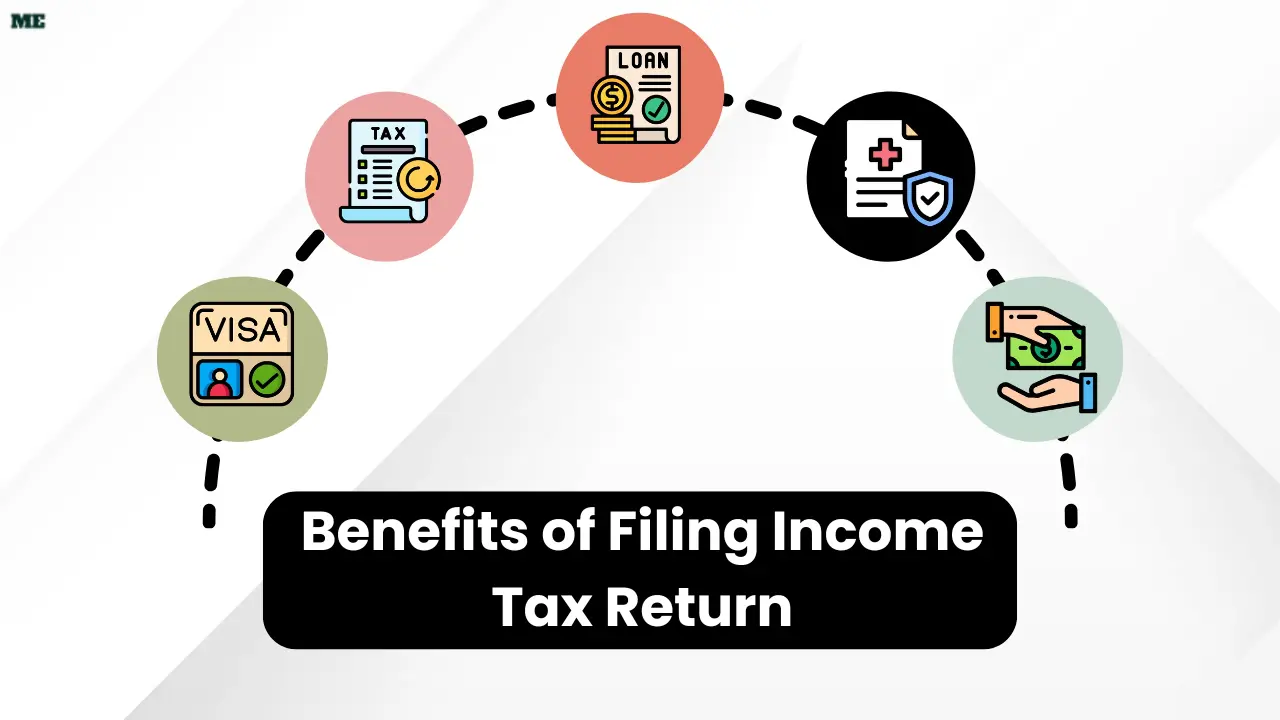
Benefits of Filing Income tax Return The Income Tax Act, 1961 explain the applicability of filing of ITR under Section 139(1). Manthan Experts July 19, 2025 Income Tax Consultancy Benefits of Filing Income Tax Returns in India Filing Income Tax Returns (ITR) in India is not just a legal obligation; it’s a crucial step towards responsible citizenship. By fulfilling our tax duties, we contribute to the nation’s development and infrastructure. Did you know that timely ITR filing can not only help you avoid penalties but also unlock valuable opportunities? Before Exploring the Benefits: A Brief Overview of Income Tax Returns (ITR) The Income Tax Return (ITR) is a formal document that assessee submit to the Indian Income Tax Department. This document provides details about assessee’s income earned during a specific financial year, the taxes they’ve paid, and any deductions or exemptions they’re eligible for. Many people mistakenly believe that filing an Income Tax Return (ITR) is only necessary when assessee owe taxes. However, this is a common misconception. In India, filing an ITR is mandatory for individuals whose total income exceeds the basic exemption limit, regardless of whether they have a tax liability or not. Exemption Limits: While Section 139(1) of the Income Tax Act, 1961 mandates ITR filing for individuals and entities exceeding certain income thresholds, the benefits extend beyond legal compliance: Claim Tax Refunds: If TDS deductions exceed assesse’s actual tax liability, filing ITR allows them to claim a refund. Carry Forward Losses: If assesse incur losses in a particular financial year, then they can carry them forward and offset them against future income, subject to applicable conditions. Proof of Income and Address: Assessee’s ITR serves as official documentation of their income and residential address, valuable for various purposes. Essential Document: ITRs are crucial records for personal finance management and future financial planning. Facilitates Loan Processing: Banks and financial institutions often consider ITRs as primary proof of income for loan applications, streamlining the approval process. Simplifies Credit Card Applications: Credit card issuers may assess assessee’s creditworthiness based on their ITR, making it easier to obtain a credit card. Smooth Visa Applications: Many embassies require ITRs as part of visa application documentation, facilitating a hassle-free application process. Avoid Penalties: Late or non-filing of ITRs can attract penalties, which can be substantial. Minimize Interest Payments: Timely tax payments and ITR filing can help assessee avoid paying excess interest. Conclusion Filing ITR is a crucial responsibility for every citizen. It not only ensures compliance with the law but also offers numerous personal and financial benefits. By filing your ITR on time and accurately, assessee contribute to nation-building and secure a smoother financial future for yourself. If you require assistance with Income Tax compliance, Manthan Experts can be your trusted advisor. Contact them at info@manthanexperts.com.to discuss your specific needs and explore how their expertise can benefit your business. Table of Contents Benefits of Filing Income Tax Returns in India Before Exploring the Benefits: A Brief Overview of Income Tax Returns (ITR) Conclusion Latest Blog and News Audit & Assurance Services Blog Bookkeeping & Accounting Services GST GST Services Income Tax Income Tax Consultancy ITR e-Filing Knowledge Center Other
Challenges Faced by Taxpayers in Faceless Scrutiny Assessments

Challenges Faced by Taxpayers in Faceless Scrutiny Assessments Manthan Experts July 19, 2025 Income Tax, Income Tax Consultancy Introduction The introduction of Faceless Scrutiny Assessments under the Indian Income Tax framework was aimed at improving transparency, reducing human intervention, and making the tax assessment process more efficient. While the initiative was introduced with the goal of reducing corruption and increasing efficiency, it has also brought a new set of challenges for taxpayers. This blog explores the various difficulties taxpayers face in faceless scrutiny assessments, why these issues arise, and how they impact the overall tax compliance experience. What is Faceless Scrutiny Assessment? Faceless scrutiny assessments were introduced by the Central Board of Direct Taxes (CBDT) as part of the Transparent Taxation – Honoring the Honest initiative in 2020. Under this system, tax assessments are conducted digitally, eliminating the need for physical interaction between taxpayers and tax officers. The assessment process is managed through a centralized system that assigns cases to officers randomly, ensuring that the identity of the assessing officer remains anonymous. Objectives of Faceless Scrutiny: Eliminate face-to-face interactions to reduce the scope for corruption. Bring greater transparency and accountability to the tax assessment process. Minimize bias and favoritism in tax assessments. Make the assessment process quicker and more efficient. While the system has introduced many positive changes, it has also created significant challenges for taxpayers. Challenges Faced by Taxpayers in Faceless Scrutiny Assessments 1. Lack of Personal Interaction and Clarification In the traditional system, taxpayers or their representatives could personally meet the assessing officer to clarify doubts, present additional documents, and explain complex transactions. In the faceless system, this personal interaction is completely removed. 👉 Challenge: Taxpayers often struggle to explain the nuances of their cases through written communication alone. Misunderstandings or misinterpretations can lead to incorrect assessments and penalties. 2. Complex Documentation and Upload Process The faceless assessment system requires all supporting documents and responses to be uploaded online through the e-filing portal. 👉 Challenge: The portal can be difficult to navigate, especially for those unfamiliar with digital platforms. Large or multiple documents may exceed file size limits or face technical issues during upload. Any delay or incorrect submission can result in adverse assessments. 3. Technical Glitches and System Errors Since the process is fully digital, it is prone to technical glitches such as: Portal downtime. Inability to upload files. Error messages while filing responses. 👉 Challenge: Taxpayers may miss submission deadlines due to technical issues. The lack of human support for resolving such issues increases frustration. 4. Standardized Approach Leading to Misjudgment Faceless assessments rely heavily on algorithms and automated scrutiny methods. 👉 Challenge: Automated systems may not consider the unique circumstances of each case. Complex cases involving international transactions, capital gains, or business restructuring may be misunderstood by the algorithm. The lack of a case-by-case assessment can result in unjustified tax demands. 5. Inadequate Opportunity for Rebuttal and Explanation In traditional assessments, taxpayers could meet the officer to explain discrepancies or defend their claims. In faceless assessments, this opportunity is restricted to written communication. 👉 Challenge: Taxpayers may not have enough time to gather and submit all necessary evidence. There’s limited scope to provide real-time clarifications. The lack of interaction reduces the taxpayer’s ability to argue their case effectively. 6. Mismatch in Data and Lack of Context Faceless scrutiny relies heavily on automated cross-verification of financial data, including bank transactions, Form 26AS, and other financial statements. 👉 Challenge: Minor mismatches due to rounding errors or timing differences may trigger scrutiny. Algorithms may flag discrepancies without considering genuine reasons, leading to unnecessary penalties. Lack of human judgment to understand context increases errors. 7. Delayed Responses and Communication Gaps The faceless system operates through a centralized system that assigns cases randomly. This can lead to delays in communication and responses. 👉 Challenge: Delayed responses from the department increase anxiety for taxpayers. Taxpayers may receive multiple notices simultaneously without clarity on how to respond. Lack of real-time communication increases the risk of miscommunication. 8. Increased Burden on Tax Professionals Tax professionals and chartered accountants (CAs) play a crucial role in helping taxpayers respond to scrutiny notices. 👉 Challenge: Increased complexity of online filing increases workload for tax professionals. Professionals face pressure to meet short deadlines while navigating technical issues. Miscommunication with tax authorities can lead to adverse consequences for both taxpayers and tax consultants. Why Do These Problems Arise? 1. Overdependence on Technology The faceless assessment system is entirely dependent on digital infrastructure. Any technical glitch or system failure can delay responses, misplace documents, or cause submission errors. A weak internet connection or system downtime can prevent taxpayers from meeting deadlines. 2. Lack of Human Judgment Faceless assessments rely on algorithms and automated systems to analyze data and detect discrepancies. Automated systems lack the ability to consider subjective factors, business complexity, or industry-specific variations. Complex cases requiring professional judgment are often misinterpreted by the system. 3. Poor Communication Infrastructure Communication between taxpayers and tax authorities is restricted to the e-filing portal. Lack of direct interaction limits the ability to provide context or real-time explanations. Miscommunication or delayed responses from the department increase uncertainty. 4. One-Size-Fits-All Approach The faceless system follows a standardized procedure for all cases, regardless of complexity. Simple cases may be handled well, but complex cases involving multiple jurisdictions or financial instruments may be mishandled. The absence of case-specific handling increases the risk of incorrect assessments. 5. Inadequate Training and Awareness Many taxpayers, especially small businesses and individuals, are not familiar with the faceless system. Lack of clear guidelines on how to respond to scrutiny notices creates confusion. Insufficient training for tax professionals on the new system adds to the complexity. 6. Lack of Opportunity for Clarification and Explanation Since personal interaction with assessing officers is not allowed, taxpayers cannot explain complex issues directly. Written communication may not always capture the complete context of a transaction. The inability to provide real-time clarification increases the chances of misjudgement. 7. Data Mismatch and System Errors The system relies heavily on data from Form 26AS,… Continue reading Challenges Faced by Taxpayers in Faceless Scrutiny Assessments
Different Income Tax Forms You Should Know Before Filing
Different Income Tax Forms You Should Know Before Filing Manthan Experts March 10, 2026 Blog, Income Tax Consultancy, ITR e-Filing Introduction Here’s a brief overview of the Income Tax Forms (ITR) used in India for filing tax returns. These forms are designed to capture different types of income and deductions based on an individual’s or business entity’s financial status. Here’s a summary: · ITR Form 1: For individuals with income from salary, pension, and other sources. · ITR Form 2: For individuals and HUFs with income from multiple sources, including capital gains, (Except Income from Business or Profession). · ITR Form 3: For individuals and HUFs who are in business or profession. · ITR Form 4: For individuals, HUFs, and firms (other than LLPs) opting for the presumptive taxation scheme under section 44AD, 44ADA, or 44AE. · ITR Form 5: For LLPs, AOPs, BOIs, cooperative societies, and other entities. · ITR Form 6: For companies other than those claiming exemptions under section 11. · ITR Form 7: For trusts, charitable organizations, political parties, and other similar entities claiming exemptions. Now let us discuss all the forms below ITR Form 1 ITR Form 1 is also known as Sahaj. It is a simple and user-friendly income tax return form meant for individuals who have a basic and straightforward income structure. This form is ideal for individuals with income from salary, pension, or other sources, and it is the most commonly used ITR form for salaried employees. Here’s a detailed look at ITR Form 1: Eligibility for ITR Form 1 (Sahaj) You can use ITR Form 1 if: You are an individual. Your total income is up to ₹50 lakh during the financial year. Your income comes from: Salary or pension. One house property (income/loss). Other sources (like interest income, dividend income, etc.). You are not a business owner or self-employed. (If you are, you will need to file ITR Form 3 or 4). You are a resident (either ordinary or not ordinarily resident). Non-resident Indians (NRIs) cannot use this form. Required Documents for Filing ITR Form 1: Form 16: Provided by your employer, it contains details of your salary, TDS, and deductions. Bank Statements: To calculate income from other sources (e.g., interest on savings accounts). Proof of Deductions: For example, receipts of investments made under sections 80C, 80D, etc. Form 26AS: A summary of taxes deducted and paid on your behalf by third parties like your employer or banks. ITR Form 2 ITR Form 2 is designed for individuals and Hindu Undivided Families (HUFs) who have income from multiple sources and who do not have income from business or profession. It is one of the more comprehensive forms for filing income tax returns, as it covers income from salary, house property, capital gains, foreign income, and other sources. Who Should Use ITR Form 2? ITR Form 2 should be used by: Individuals and HUFs who do not have business or profession income. Individuals with income from: Salary or Pension House Property (income or loss) Capital Gains (sale of property, stocks, etc.) Foreign Income Other sources (interest, dividend income, etc.) Those who have income from more than one house property. Individuals receiving income from foreign assets. Those with income from royalties or research grants. People needing to report capital gains. Documents Required: Form 16 (if you are a salaried employee) – shows your salary and TDS details. Bank statements – for calculating interest income or other income sources. Form 26AS – shows the tax deducted on your behalf. Proof of deductions – receipts for life insurance, PPF, health insurance, etc. Capital gains documents – details of asset sales, purchase, and capital gains calculations. Rental income documents – proof of rental income and expenses. Who Should Not Use ITR Form 2? Self-employed individuals or those with business income: They should use ITR Form 3 or ITR Form 4, depending on their specific business structure. Individuals claiming presumptive income under Section 44AD or 44ADA: They should use ITR Form 4. ITR Form 3 ITR Form 3 is meant for individuals and Hindu Undivided Families (HUFs) who have income from business or profession. It is used by taxpayers who are self-employed, freelancers, or partners in a partnership firm. This form is designed to capture more detailed income information, including income from business, profession, and other sources. Who Should Use ITR Form 3? ITR Form 3 should be used by: Individuals and HUFs who have income from: Business or Profession (either as a sole proprietor or partner in a firm). Salary or Pension. Income from House Property. Capital Gains (e.g., from the sale of property, shares, etc.). Income from Other Sources (e.g., interest income, dividends, etc.). This form is suitable for those who need to report: Income from business: Whether you are a freelancer (e.g., consultants, doctors, lawyers) or a small business owner. Income from profession: Such as income earned by professionals like chartered accountants, architects, etc. Partners in a partnership firm: If you’re a partner in a firm, you need to disclose income and share of profit. Documents Required for Filing ITR Form 3: Form 16: For salary and TDS details (if you are salaried). Profit & Loss Account and Balance Sheet: For business income, detailing your business expenses and revenue. Form 26AS: A statement of tax deducted at source (TDS). Capital Gains Documents: Details of the sale of assets, purchase price, and capital gains. Bank Statements: For interest income and other sources. Proof of Deductions: For claiming deductions under sections like 80C, 80D, etc. Partnership Deed: If you are a partner in a firm, the deed may be required to clarify your share in the profits. Who Should Not Use ITR Form 3: Salaried individuals: They should use ITR Form 1 or ITR Form 2, depending on their income sources. Small businesses opting for presumptive taxation: If you are eligible for presumptive taxation (Section 44AD, 44AE, 44ADA), you can file ITR Form 4 instead of Form 3. ITR Form 4 ITR Form 4 is designed for individuals, Hindu Undivided Families (HUFs), and sole proprietors who have income from a business or profession and wish to opt for the presumptive taxation scheme under sections 44AD, 44AE, or 44ADA of the Income Tax Act. This form is specifically meant for taxpayers with presumptive income and is often used by small businesses, freelancers, and professionals. Who Should Use ITR Form 4? ITR Form 4 should be used… Continue reading Different Income Tax Forms You Should Know Before Filing
ESIC Registration Made Easy: Process, Benefits & Required Documents in 2026

ESIC Registration Made Easy: Process, Benefits & Required Documents in 2026 Manthan Experts March 10, 2026 Blog, Payroll (PF & ESIC) Introduction The Employee’s State Insurance Corporation (ESIC) is a statutory body under the Ministry of Labour and Employment, Government of India. It administers the Employee’s State Insurance (ESI) scheme, which provides social security and health insurance to employees working in various sectors. What is ESIC? ESIC is an autonomous organization that ensures employees receive medical care, financial benefits, and social security in case of sickness, maternity, disability, or employment injury. The scheme is applicable to establishments covered under the ESI Act, 1948. Applicability of ESIC The Employee’s State Insurance Corporation (ESIC) scheme applies to various establishments based on specific criteria. 1. Coverage of Establishments Applicable to factories, shops, hotels, restaurants, cinemas, road transport services, educational institutions, hospitals, and private medical institutions. Any establishment notified by the State or Central Government under the ESI Act, 1948. 2. Employee Coverage Employees earning a total salary of up to Rs. 21,000 per month (Rs. 25,000 for disabled employees). If an employee’s wages exceed Rs. 21,000 during the contribution period, they remain covered until the end of that contribution cycle. Employees working in both organized and unorganized sectors. 3. Minimum Employee Requirement Mandatory for employers with 10 or more employees in most states. In some states, the threshold is 20 or more employees. Contribution to ESIC The Employee’s State Insurance Corporation (ESIC) scheme is funded through contributions made by both employers and employees based on their wages. Contribution Rates Contribution rate (as a percentage of earnings) Employer: 3.25% of employee’s wage Employer: 0.75% of employee’s wage Key Points: Total Contribution: 4% of the employee’s gross salary. Employee Exemption: Employees with daily earnings below ₹176 are not required to make contributions, but the employer must still contribute. Wage Ceiling: Applicable to employees with a gross salary of up to Rs. 21,000 per month (Rs. 25,000 for disabled employees). Payment Deadline: ESIC contributions must be deposited by the 15th of the following month. NOTE:- Employees earning less than Rs. 176 per day are exempted from their contribution. Benefits of ESIC ESIC provides several benefits to insured employees and their dependents: 1. Medical Benefit Full medical care for the insured person and their family. Covers hospitalization, outpatient services, and specialist consultations. 2. Sickness Benefit 70% of wages paid for up to 91 days in a year in case of certified illness. Extended sickness benefit for chronic diseases up to 2 years. 3. Maternity Benefit 100% of wages paid for 26 weeks (extendable by 1 month). Available to female employees who have contributed for 70 days in the preceding two years. 4. Disability Benefit Temporary Disability: 90% of wages as long as the disability continues. Permanent Disability: Monthly pension based on the disability percentage. 5. Dependent Benefit Monthly pension to dependents in case of an employee’s death due to an employment injury. 6. Funeral Expenses A lump sum of Rs. 15,000 is provided to the family for funeral expenses. 7. Unemployment Allowance (Rajiv Gandhi Shramik Kalyan Yojana) 50% of wages for up to 24 months in case of job loss due to retrenchment or factory closure. ESIC Registration Process 1. Employer Registration on the ESIC portal (www.esic.gov.in). 2. Submission of employer details and documents (PAN, address proof, list of employees, etc.). 3. Generation of a 17-digit Employer Code Number. 4. Registration of employees and generation of ESI numbers for them. Penalty for Non-Compliance Failure to register: Fine up to Rs. 5,000. Non-payment of contributions: Interest at 12% per annum. Non-compliance with ESIC rules may lead to legal action, penalties, and imprisonment. Salary or Wages Components Included in ESI Scheme Under the Employee’s State Insurance (ESI) Scheme, wages are broadly defined as all remuneration paid to an employee while on duty or on leave, including various allowances. The components of wages covered for ESI contribution include: 1. Components Included in ESI Wages: Basic Salary Dearness Allowance (DA) House Rent Allowance (HRA) Conveyance/Transport Allowance Medical Allowance City Compensatory Allowance (CCA) Overtime Wages (if paid regularly) Night Shift Allowance Meal/Food Allowance Bonus/Incentives (if paid monthly) Leave Encashment (paid during service) Attendance Bonus Commission (if paid regularly) 2. Components Excluded from ESI Wages: Certain components are not considered for ESI contribution, such as: Statutory Bonus (Annual bonus) Gratuity Retrenchment Compensation Encashment of Leave (at the time of termination/resignation) Employer’s Contribution to PF and ESI Overtime Allowance (if paid occasionally) Service Compensation Production Incentive (if paid yearly) Is ESI Contribution Amount Refundable? No, the Employee’s State Insurance (ESI) contribution amount is generally non-refundable. The contributions made by both the employer and employee go towards providing medical, disability, maternity, and other social security benefits under the ESI scheme. Exceptions Where Refund May Be Possible: In certain cases, refunds may be processed: 1. Excess Contribution Paid: If an employer mistakenly overpays ESI contributions, they can apply for a refund. The refund is processed after verification by the ESIC department. 2. Deduction from Ineligible Employees: If an employee earns above Rs. 21,000 per month but ESI contributions were deducted mistakenly, they may be eligible for a refund upon request. 3. Wrongful Deduction After Resignation/Exit: If ESI was deducted after an employee left the organization or was no longer eligible, the employer can apply for a refund. 4. Technical or Banking Errors: If a transaction fails or an amount is debited twice, ESIC may process a refund upon proof of the issue. Process for Refund Application: Employers must submit a written request or apply through the ESIC online portal. Supporting documents such as salary records, bank statements, and challans may be required. Refund processing depends on ESIC verification and may take a few weeks to months. Conclusion The ESIC scheme is a crucial social security initiative that provides comprehensive benefits to employees and their families. Employers must ensure timely compliance with ESIC regulations to avoid penalties and support employee welfare. If you require assistance on Payroll Services, Manthan Experts can be your trusted advisor. Contact them at info@manthanexperts.com. to discuss your specific needs and explore how their expertise can benefit your business. Search Table of Contents Introduction What is ESIC? Applicability of ESIC Contribution to ESIC Benefits of ESIC ESIC Registration Process Penalty for Non-Compliance Salary or Wages Components Included in ESI Scheme Is ESI Contribution Amount Refundable? Conclusion Latest Blog and News Audit & Assurance Blog Bookkeeping & Accounting GST Income Tax Consultancy ITR e-Filing Knowledge Update Payroll (PF & ESIC)
GST Audit: Types, Process, and Requirements in 2026
GST Audit: Types, Process, and Requirements in 2026 Manthan Experts March 10, 2026 Audit & Assurance, Blog What is a GST Audit? A GST audit is an examination of a taxpayer’s records, returns, and documents to verify the accuracy of turnover declared, taxes paid, refunds claimed, and input tax credit (ITC) availed. It helps ensure that the taxpayer is complying with the provisions of the Goods and Services Tax (GST) law. The audit is conducted by tax authorities or authorized professionals to check if the correct GST is paid and if any discrepancies exist. It also helps prevent tax evasion and ensures that the taxpayer follows the rules set by the income tax department and the central government. Why is a GST Audit Important? GST audits are essential to: ✔️ Confirm accurate reporting of sales, purchases, and tax payments. ✔️ Verify that ITC claims and refunds are legitimate. ✔️ Identify under-reporting or misreporting of taxable income. ✔️ Prevent tax evasion and ensure proper compliance with the income tax act 1961. ✔️ Ensure that businesses maintain proper books of account and follow tax regulations. Types of GST Audits There are three types of GST audits based on the audit authority and purpose: 1. Turnover-Based Audit (Section 35(5) of CGST Act) Applicable when a taxpayer’s aggregate turnover exceeds ₹5 crore in a financial year. The taxpayer must get their accounts audited by a Chartered Accountant (CA) or a Cost Accountant. A reconciliation statement in Form GSTR-9C is required. (This audit requirement was removed from FY 2020-21 onwards, but businesses may still do voluntary audits.) 2. Audit by Tax Authorities (Section 65) The Commissioner of CGST/SGST or an authorized officer may conduct an audit to verify compliance. Process: Notice issued in Form GST ADT-01 at least 15 working days before the audit. Audit period covers a financial year or multiple financial years. Audit completion within 3 months (extendable by 6 months). Obligations of the Registered Person: Provide access to books of account and other documents. Offer support and clarification to tax officers. Cooperate with auditors during the review process. Audit Report: Findings are communicated in Form GST ADT-02 within 30 days of completion. If discrepancies are found (like unpaid tax or wrong refund), demand and recovery action will be initiated. 3. Special Audit (Section 66) A special audit is ordered by the Assistant Commissioner with prior approval from the Commissioner if there’s suspicion of incorrect value declaration or wrong ITC claims. Process: Order issued in Form GST ADT-03. Conducted by a chartered accountant or cost accountant appointed by the Commissioner. Auditor must submit the report within 90 days (extendable by another 90 days). Audit expenses, including auditor fees, are covered by the Commissioner. Audit Report: Findings are communicated in Form GST ADT-04. Taxpayer is given an opportunity to explain discrepancies. If discrepancies are found, demand and recovery action is initiated. 4. Statutory Audit (Removed w.e.f. 1st August 2021) A statutory audit was earlier mandatory for businesses with a turnover exceeding ₹2 crore in a financial year under Section 35(5) of the CGST Act. Key Points: Conducted by a chartered accountant or a cost accountant. Covered the verification of tax payments, input tax credit, and turnover. Removed by the Finance Act 2021 (effective from 1st August 2021). Replaced with a self-certified Form GSTR-9C for taxpayers with a turnover exceeding ₹5 crore. Current Rule: Taxpayers with turnover above ₹5 crore must file: GSTR-9 – Annual Return GSTR-9C – Self-certified reconciliation statement Businesses must submit supporting documents like: Income tax returns Form 26AS Internal audit report Cost audit report Financial statements (Profit and Loss, Balance Sheet) Documents Required for a GST Audit To ensure a smooth audit, the taxpayer should keep the following documents ready: 📌 Books of account (purchase and sales records) 📌 Profit and Loss Statement and Balance Sheet 📌 Income tax returns and Form 26AS 📌 GSTR-1, GSTR-3B, GSTR-9, GSTR-9C 📌 Cost audit report (if applicable) 📌 Internal audit report 📌 All invoices (tax invoices, bills of supply, debit/credit notes) 📌 Bank account statements 📌 E-way bills 📌 Contracts and purchase orders 📌 Stock register and fixed asset register Outcome of a GST Audit If discrepancies are found during the audit, the tax officer will: Communicate the findings in writing. Provide a chance for the taxpayer to respond. If the taxpayer is found liable for unpaid or short-paid tax, wrong refund, or wrong ITC claims: Demand and recovery action will be initiated. Interest and penalties may be applied as per GST law. Role of Tax Professionals in GST Audit Tax professionals like chartered accountants and statutory auditors play a crucial role in ensuring proper GST compliance. They help businesses with: Preparing and filing GST returns Handling audits and compliance checks Advising on GST-related issues Representing clients in case of disputes Importance of GST Audit for Businesses GST audits are essential for businesses to: ✔️ Maintain accurate records and ensure proper tax compliance. ✔️ Avoid penalties and legal issues. ✔️ Ensure correct taxable income and avoid misreporting. ✔️ Keep track of all tax payments and refunds. ✔️ Maintain transparency with tax authorities. When to Expect a GST Audit Turnover exceeds ₹5 crore – File self-certified GSTR-9C. Suspicion of under-reporting or over-claiming of ITC – Special audit may be ordered. Random selection by tax authorities – Routine audit may be conducted. Conclusion A GST audit helps ensure proper tax compliance and accurate reporting of sales, purchases, and input tax credit. While statutory audits are no longer mandatory, businesses with a turnover exceeding ₹5 crore must file a self-certified GSTR-9C. Proper record-keeping of books of account, invoices, and tax returns is crucial to handle any future audit smoothly. Consulting experienced tax professionals and chartered accountants can help in managing GST audits effectively. FAQs on GST Audit 1. What is a GST audit? A GST audit is an examination of records and returns to verify the accuracy of turnover, tax payments, and ITC claims. 2. Who conducts a GST audit? It can be conducted by tax authorities or appointed chartered accountants or cost accountants. 3. Is a statutory audit required under GST? No, the statutory audit requirement was removed from 1st August 2021. 4. What happens if discrepancies are found? Tax authorities will communicate the findings, and recovery action may be initiated for unpaid tax or wrong ITC claims. Search Table of Contents What is a GST Audit? Why is a GST Audit Important? Types of GST Audits Documents Required for a GST Audit Outcome of a GST Audit Role of Tax Professionals in GST Audit Importance of GST Audit for Businesses When to Expect a GST Audit Conclusion FAQs on GST Audit Latest Blog and News Audit & Assurance… Continue reading GST Audit: Types, Process, and Requirements in 2026
GST Composition Scheme: Benefits, Eligibility and Registration Process
GST Composition Scheme: Benefits, Eligibility and Registration Process Manthan Experts March 10, 2026 Blog, GST Introduction The GST Composition Scheme offers small businesses a streamlined approach to tax compliance under the Goods and Services Tax framework. This scheme allows eligible dealers to pay tax at fixed rates based on their turnover rather than on individual transactions, significantly reducing compliance burdens. Eligibility Criteria for the Composition Scheme Businesses can opt for the GST Composition Scheme if they meet these specific requirements: Manufacturers, traders, and restaurants with an annual turnover of up to ₹1.5 crore (₹75 lakh for north eastern states and Himachal Pradesh) Service providers with an annual turnover of up to ₹50 lakh Intra-state suppliers only (businesses cannot engage in inter state supplies) Businesses that do not supply non-GST goods (like alcohol, petroleum products) Who Cannot Opt for the Composition Scheme? The following businesses are ineligible for the composition scheme under GST: Businesses engaged in interstate sales or exports Suppliers of goods through an e-commerce operator, unless permitted under specific conditions Casual taxable person and resident taxable person Manufacturer of ice cream, pan masala, or tobacco products Businesses involved in transactions under the reverse charge mechanism Turnover Limits and Financial Year Considerations The eligibility limit varies based on business type and location: The turnover limit is calculated based on the turnover of all businesses under the same PAN in the previous financial year. Tax Rates Under the GST Composition Scheme Businesses that have opted for the composition scheme pay GST at these reduced rates: Important: A dealer is required to pay tax from their own pocket as they cannot charge GST separately from customers under this scheme. Benefits of the GST Composition Scheme The composition scheme offers several advantages for small businesses: Lower tax rates reduce the financial burden on small businesses Simplified compliance with quarterly return filing (CMP-08) instead of monthly returns No requirement to issue tax invoices — businesses can provide a bill of supply instead Limited record-keeping requirements, making bookkeeping significantly easier Reduced compliance costs for the composition dealer Limitations and Restrictions Despite its benefits, the scheme has certain limitations: No input tax credit can be claimed by businesses Cannot supply goods outside the state or engage in exports Cannot collect tax separately from customers Limited eligibility for businesses selling restricted goods Recent Amendments & Updates (2025) The GST Composition Scheme has undergone several changes based on cost amendment act 2018 and recent GST rate revisions: Inclusion of E-commerce Suppliers: Certain intra-state e-commerce suppliers can now opt for the Composition Scheme under specific conditions Revised Tax Rate for Services: Service providers with annual turnover up to ₹50 lakh can now opt for a 6% composition tax rate Enhanced Compliance Measures: Form GST CMP-02 is now mandatory for opting into the scheme at the start of a financial year Sector-Specific Composition Rates: Businesses in sectors like textiles and food processing may see further rate adjustments in upcoming GST Council meetings Registration Process for the Composition Scheme Businesses can apply for the GST Composition Scheme using these forms: New businesses: Select the Composition Scheme while registering under GST (Form GST REG-01) Existing taxpayers: File Form GST CMP-02 before the start of the financial year Quarterly tax payment: Use Form CMP-08 Annual return filing: Submit Form GSTR-4 annually Compliance Requirements Businesses operating under the composition scheme must: Issue a bill of supply instead of a tax invoice Display a sign indicating “Composition Taxable Person” at their place of business Mention “composition taxable person, not eligible to collect tax” on every bill of supply File quarterly returns (Form CMP-08) and one annual return (GSTR-4) Maintain simplified records of their supply goods transactions Switching from Composition to Regular Scheme A business that has opted for the composition scheme may need to switch to the regular scheme if: Its turnover exceeds the threshold limit It begins supplying goods or services that are not eligible under the composition scheme It engages in inter state supplies In such cases, the business must: File Form GST CMP-04 within 7 days of becoming ineligible Start issuing tax invoices and collecting GST from customers Begin maintaining detailed records as required under regular GST registration Conclusion The GST Composition Scheme is an excellent choice for small businesses looking to simplify compliance and reduce tax liabilities. It provides substantial relief to small traders, manufacturers, and restaurants with turnover up to ₹1.5 crore, and service providers with turnover up to ₹50 lakh. However, businesses must carefully evaluate their eligibility and operational requirements, as the scheme restricts interstate trade, exports, and input tax credit claims. The recent amendments have made the scheme more inclusive by allowing certain e-commerce businesses and service providers to participate, benefiting a broader range of small businesses. For businesses with predominantly B2C operations within a single state, the composition scheme offers a straightforward and cost-effective compliance solution under the GST framework. Search Table of Contents introduction Eligibility Criteria for the Composition Scheme Who Cannot Opt for the Composition Scheme? Turnover Limits and Financial Year Considerations Tax Rates Under the GST Composition Scheme Benefits of the GST Composition Scheme Limitations and Restrictions Recent Amendments & Updates (2025) Registration Process for the Composition Scheme Compliance Requirements Switching from Composition to Regular Scheme Conclusion Latest Blog and News Audit & Assurance Blog Bookkeeping & Accounting GST Income Tax Consultancy ITR e-Filing Knowledge Update Payroll (PF & ESIC)
GST on Banquet Hall and Catering Services

GST on Banquet Hall and Catering Services Manthan Experts July 19, 2025 GST Introduction Banquet halls, catering, decoration, and photography services play a crucial role in weddings, events, and parties. With the introduction of Goods and Services Tax (GST), the rates and tax implications on these services have evolved—particularly after the major amendment effective from 01 October 2019. In this blog, we will cover: GST applicability before and after the amendment Current GST rates on banquet, catering, decoration, and photography services Booking process and invoicing guidelines Are grouped services considered a composite supply or a mixed supply Applicable GST rate when all four services are availed as a package GST on Banquet and Catering Services: Before 01/10/2019 1. Banquet Hall Rental (Pre-2019) Tax Rate: 18% GST HSN Code: 9963 – Accommodation, Event & Function Services Nature: Treated as a standalone service 2. Catering Services (Pre-2019) Tax Rate: GST applicable at 18% with eligibility to claim Input Tax Credit (ITC) HSN Code: 9963 This included food preparation and serving. 3. Decoration & Photography (Pre-2019) Tax Rate: Decoration: 18% Photography: 18% HSN Codes: Decoration: 9985 (Event management services) Photography: 9983 Important Note: Before the amendment, all these services were taxed separately unless bundled under one price. Even when bundled, classification as composite or mixed supply depended on the dominant service. What Changed After the 01/10/2019 Amendment? The GST Council brought clarity on composite supplies related to event services such as banquet with catering. Key Change: Effective 1st October 2019, when banquet hall and catering services are provided as a composite supply, a GST rate of 5% applies without the benefit of Input Tax Credit. This amendment made the tax structure more straightforward for event organizers and customers. It encouraged bundled services with a lower tax rate – BUT ITC IS NOT ALLOWED. GST Rates After 01/10/2019 Composite Supply: Charged at the GST rate applicable to the dominant service. Mixed Supply: Charged at the highest applicable GST rate among the included items Composite vs Mixed Supply: Explained with All 4 Services Let’s consider a client booking the following for a wedding: Banquet Hall Catering Decoration Photography Case 1: All services under one contract & price The principal supply is usually banquet + catering, making it a composite supply. If decoration and photography are incidental (add-on), the entire bundle may qualify under composite supply at 5% (no ITC). Case 2: All services under separate contracts or invoiced separately Treated as mixed supply Highest GST rate applies: i.e., 18% Best Practice: Opt for a single contract with banquet + catering as main service Ensure decoration and photography are clearly described as ancillary Charge a single consolidated price to avail 5% rate How to Book Services and Understand GST Liability Select the Service Package Choose either individual services or a bundled package. Check the Invoice Terms A single invoice with one price helps in qualifying for composite supply. Vendor Registration Ensure vendors are GST registered to issue valid tax invoices. GST Liability If 5% rate is charged (composite supply), vendors cannot claim ITC For decoration or photography billed separately, 18% GST with ITC applies Which Service Attracts What Rate? Conclusion Understanding the GST implications on banquet hall, catering, decoration, and photography services is crucial for event planners and clients alike. The amendment from 01/10/2019 allows a reduced rate of 5% GST on composite supply of banquet + catering, which can also apply to decoration and photography if structured properly. For maximum tax benefit: Bundle services under one contract Ensure banquet + catering are principal Treat others as ancillary By doing so, you enjoy a lower GST rate while ensuring compliance. Real-Life Case: Tollygunge Club Ltd. – GST on Bundled Services Authority for Advance Ruling (AAR), West Bengal Case: Tollygunge Club Ltd., In re Order No.: WBAAR 08 of 2024 Date: September 10, 2024 Background Tollygunge Club Ltd., a premier club in Kolkata, offers services such as renting premises for events (weddings, parties, social gatherings) and providing indoor catering. The club sought clarity on the GST rate applicable when these services are offered together. Key Issues Composite Supply Determination: Whether the combined offering of renting premises and catering services qualifies as a “composite supply” under GST. Applicable GST Rate: If deemed a composite supply, what GST rate applies, especially considering the room tariff conditions. AAR’s Observations Naturally Bundled Services: The AAR observed that renting premises and providing catering services for events are “naturally bundled” in the ordinary course of business. Composite Supply: When services are naturally bundled, they are considered a composite supply, and the GST rate is based on the main service provided. GST Rate Application: If the room tariff does not exceed ₹7,500 per unit per day, the composite supply of renting premises along with catering services qualifies for a reduced Under the provisions of Notification 11/2017-Central Tax (Rate), dated June 28, 2017 (as amended), the applicable GST rate is 5%, with no entitlement to Input Tax Credit. Conclusion The AAR ruled that when Tollygunge Club Ltd. provides a bundled service of renting premises along with catering for events, and the room tariff is below ₹7,500, the entire service qualifies as a composite supply taxed at 5% GST without ITC. Implications for Event Service Providers This ruling provides clarity for businesses offering bundled event services: Composite Supply Advantage: Bundling services like venue rental and catering can qualify as a composite supply, attracting a lower GST rate, provided conditions like room tariff thresholds are met. Importance of Documentation: Clear contracts and invoices indicating the bundling of services are crucial to substantiate the nature of the supply. Awareness of Conditions: Providers must be aware of specific conditions, such as room tariff limits, to apply the appropriate GST rate. If you require assistance on GST services, Manthan Experts can be your trusted advisor. Contact them at info@manthanexperts.com. to discuss your specific needs and explore how their expertise can benefit your business. Table of Contents Introduction GST on Banquet and Catering Services: Before 01/10/2019 What Changed After the 01/10/2019 Amendment? GST Rates After 01/10/2019 Composite vs Mixed Supply: Explained with All 4 Services How to Book Services and Understand GST Liability Which Service Attracts What Rate? Conclusion Latest Blog and News Audit & Assurance Bookkeeping & Accounting GST Income Tax Consultancy ITR e-Filing Knowledge Center Other Payroll… Continue reading GST on Banquet Hall and Catering Services