QRMP Scheme Under GST: A Complete Guide Filing an Income Tax Return (ITR) is mandatory for various individuals and entities in India, even if they don’t owe any tax. Here’s a summary of who needs to file: Manthan Experts July 14, 2025 GST Introduction The Quarterly Return Monthly Payment (QRMP) scheme under GST represents a significant relief for small taxpayers across India. Introduced to ease compliance burdens, this scheme allows eligible businesses to file quarterly GST returns while making monthly tax payments. This comprehensive guide covers everything you need to know about the QRMP scheme, from eligibility criteria to filing procedures and important due dates. What is the QRMP Scheme Under GST? The QRMP scheme is a taxpayer-friendly initiative implemented by the GST Council that allows small taxpayers with an annual turnover of up to Rs. 5 crores to file their GST returns on a quarterly basis instead of monthly. This scheme significantly reduces the compliance burden while maintaining the government’s revenue flow through monthly payments. Under this scheme, taxpayers are required to pay their GST liability every month using a simple challan but need to file their GST returns (GSTR-3B) only once a quarter. This system balances the cash flow needs of the government with the compliance ease for small businesses. Eligibility for the QRMP Scheme To be eligible for the QRMP scheme, taxpayers must meet the following criteria: Annual turnover not exceeding Rs. 5 crores in the preceding financial year Regular GST registration (composition dealers are not eligible) GSTR-3B and GSTR-1 returns filed for the preceding month/quarter as applicable No significant discrepancies in returns filed The scheme is available to taxpayers in all states and union territories including Goa, Lakshadweep, Kerala, Tamil Nadu, Bihar, Sikkim, Arunachal Pradesh, Nagaland, Puducherry, Andaman and Nicobar Islands, Telangana, and Andhra Pradesh. How to Opt for the QRMP Scheme Taxpayers eligible for the QRMP scheme can opt in through the GST portal. The facility to opt in or opt out is available in the first month of each quarter. Once opted for, the scheme will continue until the taxpayer chooses to opt out or becomes ineligible. The steps to opt for the QRMP scheme are: Log in to the GST portal Navigate to “Services” > “Returns” > “Opt-in for Quarterly Return“ Select the period for which you want to opt in Confirm your selection It’s important to note that the option to join the scheme is available only during specific windows before each quarter begins. Assessment Method for Monthly Payments Under the QRMP scheme, taxpayers can choose between two assessment methods for their monthly tax liability: 1. Fixed Sum Method The fixed sum method allows taxpayers to pay a predetermined amount as their monthly GST liability. This amount is calculated as: 35% of the tax paid in cash in the preceding quarter if the return was filed quarterly, or 100% of the tax paid in cash in the same month of the preceding year if the return was filed monthly This method is particularly beneficial for businesses with stable monthly turnovers. 2. Self-Assessment Method Under the self-assessment method, taxpayers calculate their actual tax liability for the month based on their outward supplies and inward supplies attracting reverse charge. This method offers more accuracy but requires proper bookkeeping. Taxpayers can switch between these methods each month during a quarter, providing flexibility based on their business needs. Due Dates for Filing Quarterly GSTR-3B The due dates for filing quarterly GSTR-3B under the QRMP scheme are: 22nd or 24th of the month succeeding the quarter (depending on the state) For taxpayers in Chhattisgarh, Madhya Pradesh, Gujarat, Maharashtra, Karnataka, Goa, Kerala, Tamil Nadu, Telangana, Andhra Pradesh, Puducherry, Andaman and Nicobar Islands, or Lakshadweep: 22nd of the month following the quarter For taxpayers in other states/UTs: 24th of the month following the quarter Due Dates for Monthly Payments Even though returns are filed quarterly, GST payments must be made monthly by the 25th of the following month for the first two months of the quarter. For example: For April: Payment due by May 25 For May: Payment due by June 25 For the third month of the quarter, the tax is paid along with the quarterly return filing. GSTR-3B Return Filing and Monthly Payment of Taxes The QRMP scheme streamlines the process of GSTR-3B return filing and monthly payment of taxes. Here’s how it works: For the first two months of the quarter, taxpayers make monthly payments using form GST PMT-06 For the third month, tax payment is made along with the quarterly GSTR-3B return Input Tax Credit (ITC) can be claimed in the quarterly return for all three months The quarterly return includes details of: Outward supplies Input tax credit availed Tax paid during all three months of the quarter Benefits of the QRMP Scheme The QRMP scheme offers several advantages for small taxpayers: Reduced compliance burden with quarterly instead of monthly return filing Flexibility in payment methods (fixed sum or self-assessment) Lower working capital requirements Simplified tax calculation and payment process Reduced chances of late filing penalties More time to focus on business operations instead of compliance GSTR-1 Filing Under QRMP Scheme Small taxpayers who opt for the QRMP scheme must file their GSTR-1 returns on a quarterly basis. The due date for filing quarterly GSTR-1 is the 13th day of the month following the quarter. Taxpayers have the option to upload invoices through the Invoice Furnishing Facility (IFF) for the first two months of the quarter. This allows recipients to claim input tax credit without waiting for the quarterly GSTR-1 filing. File Quarterly GST Returns on Quarterly Basis To file quarterly GST returns under the QRMP scheme: Log in to the GST portal Navigate to “Returns” > “Returns Dashboard” Select the appropriate quarter Generate and file your GSTR-3B The system will automatically account for the tax payments made during the first two months of the quarter. Annual Turnover Calculation For determining eligibility based on annual turnover: The turnover is calculated based on the PAN-level aggregate turnover… Continue reading QRMP Scheme Under GST: A Complete Guide 2025

Author: Manthan Experts
What is Reverse Charge Mechanism (RCM) Under GST
What is Reverse Charge Mechanism (RCM) Under GST Filing an Income Tax Return (ITR) is mandatory for various individuals and entities in India, even if they don’t owe any tax. Here’s a summary of who needs to file: Manthan Experts March 10, 2026 Blog, GST Introduction The Reverse Charge Mechanism (RCM) under the Goods and Services Tax (GST) framework is a taxation concept where the liability to pay tax shifts from the supplier to the recipient of goods or services. Unlike the regular GST system, where the supplier collects and remits tax, RCM ensures tax compliance in specific cases to prevent tax evasion and broaden the tax base. When is Reverse Charge Mechanism (RCM) Applicable? RCM applies in the following scenarios: 1. Notified Goods and Services The government prescribed certain goods or services where Reverse Charge Mechanism applies. Some key examples include: Goods: Cashew nuts (not shelled or peeled) Bidi wrapper leaves (tendu leaves) Raw cotton Supply of lottery, betting, and gambling Silk yarn Services: Legal services provided by an advocate Supply of Services by a Goods Transport Agency (GTA) Director’s remuneration (if not on payroll) Services by an insurance agent Recovery agent services 2. Supply from Unregistered Dealers If any registered person under GST procures any goods or avail any services from an unregistered persons or suppliers, RCM applies on that transactions. This ensures tax compliance on transactions where suppliers of goods or services were not registered under GST. 3. E-Commerce Transactions For certain services provided through e-commerce platforms, the responsibility to pay GST falls on the e-commerce operator instead of the supplier. Examples include: Ride-hailing services (Uber, Ola) Housekeeping services (Urban Clap) Food delivery services (Zomato, Swiggy) for certain restaurant supplies What is Self-Invoicing? Self-billing, also known as self-generated invoicing, is a process where a customer, rather than the supplier, creates and provides an invoice for the goods or services they received. This typically happens when the customer is buying from an unregistered supplier, especially in situations where the Reverse Charge Mechanism (RCM) applies, means the customer is responsible for the payments of GST on behalf of the supplier. Self generated invoices are required when a registered persons procures any goods or avail any services from any unregistered persons under the RCM . Since the supplier cannot raised a GST invoice, the recipient must generate a self-invoice to document the transaction and comply with tax regulations. Example: ABC Ltd. (a registered company) hires a freelance consultant who is not registered under GST. In this case ABC Ltd. In this case, ABC Limited generate self Invoice for Payment of Gst and Claim ITC on this Transactions. Conditions Required under the Reverse Charge Mechanism? Businesses subject to RCM must follow these compliance requirements: Compulsory GST Registration: Any person liable to pay GST under RCM must register under GST, even if their turnover is below the threshold limit. Self Generated Invoices: If any purchases are made from any unregistered suppliers, the recipient must prepare a self generated invoice. Payment in Cash: GST under RCM must be paid from electronic cash ledger as available tax credit cannot be used for the payment of tax liabilities. Proper Documentation: Businesses must maintain the records of invoices, Receipt or Challan Copy of tax payment, and related documents for the requirements of compliance and audit purposes. Time limit for Supply of Goods or Services under the GST of RCM? The Time of Supply determines when the GST liability arises under RCM: For Goods Earliest of the following: The date of receipt of goods The date of payment (if recorded in books within 30 days) The date immediately following 30th days from the date of Invoices. For Services Earliest of the following: The date of payment The date immediately following 60th days from the date of Invoices. If none of the above apply, the date of entry in the recipient’s books of accounts is considered. Is Input Tax Credit Allowed under RCM? Yes, Input Tax Credit (ITC) is allowed on GST paid under RCM, subject to the following conditions: The goods or services must be used only for the business purposes and if availed for any other purposes must return the ITC The recipient must first pay GST from electronic cash ledger under RCM before claiming ITC. Input Tax Credit available for the Tax payment under RCM can be can used to discharges future Tax liabilities. Is there any Exemption under Reverse Charge Mechanism? Yes, there are certain exemptions under RCM: Small Businesses & Composition Dealers: Businesses registered under the Composition Scheme are not required to pay tax under RCM. Exempted Goods & Services: Some supplies, such as agricultural produce, healthcare services, and public transportation, are exempt from GST, meaning RCM does not apply. Latest Amendments in Reverse Charge Mechanism 1. Time of Supply Rules (Effective from November 1, 2024) An amendment to Section 13 of the CGST Act, 2017 was introduced by the GST Council to clarify the time limit for supply of services under RCM. Registered recipients must issue self-invoices within 30 days of receiving goods or services from unregistered persons to claim ITC. Non – fulfilment of conditions for RCM will result in loss of Input Tax Credit. 2. Inclusion of New Services Under RCM (September 9, 2024) The 54th GST Council Meeting held on 09/09/2024 introduced updates to RCM, including: Inclusions of renting of commercial property by an unregistered person to a registered person under RCM to prevent revenue leakage. Expanding e-commerce-related services under RCM. Practical Examples of RCM Application 1. Services by a Director Mr. Sharma, a director of XYZ Pvt. Ltd., receives a sitting fee of ₹50,000. Under RCM, XYZ Pvt. Ltd. is liable to pay GST on this amount since services provided by a director (not on payroll) are covered under RCM. 2. Goods Transport Agency (GTA) Services A registered trader avails transportation services from a GTA for ₹10,000. Since GTA services are notified under RCM, the trader must pay GST on ₹10,000 under RCM and can later claim ITC. Conclusion The Reverse Charge Mechanism… Continue reading What is Reverse Charge Mechanism (RCM) Under GST
Section 31A of GST: Facility of Digital Payment to Recipient
Section 31A of GST: Facility of Digital Payment to Recipient Filing an Income Tax Return (ITR) is mandatory for various individuals and entities in India, even if they don’t owe any tax. Here’s a summary of who needs to file: Manthan Experts July 14, 2025 GST Introduction Section 31A under the Goods and Services Tax (GST) Act aims to promote digital payments and encourage transparency in business transactions. This section mandates that certain specified taxpayers must provide their customers (recipients) with the option to make payments through digital modes. The objective behind this provision is to reduce cash transactions, improve tax compliance, and ensure that business dealings are more secure and traceable. In this detailed guide, we will cover the scope, applicability, benefits, and compliance requirements related to the facility of digital payment under Section 31A of the GST Act. What is Section 31A of GST? Section 31A of the GST Act was introduced to make it mandatory for specified businesses to offer recipients the option to make payments using prescribed electronic payment modes. This section ensures that businesses provide at least one mode of digital payment to facilitate cashless transactions, thereby supporting the government’s goal of creating a digitally empowered economy. The provision under Section 31A is part of the broader push towards the Digital India initiative, encouraging taxpayers to adopt digital infrastructure for smoother and more transparent business operations. Legal Basis of Section 31A Section 31A was inserted into the GST Act through an amendment to align the GST framework with the growing need for digitization in the Indian economy. It ensures tha recipients (buyers) have the flexibility to make payments electronically, reducing dependence on cash transactions. The Central Government, under its authority, has prescribed specific payment modes that businesses must provide to comply with this requirement. Applicability of Section 31A The facility of digital payment under Section 31A applies to: Registered taxpayers with an aggregate turnover exceeding ₹50 crore in any financial year. Businesses involved in the supply of goods or services to end consumers (B2C transactions). Transactions where an invoice is generated and payment is expected from the recipient. Who is Exempt from Section 31A? ❌ Registered businesses with an annual turnover of ₹50 crore or below. ❌ Composition scheme taxpayers. ❌ Transactions involving business-to-business (B2B) dealings (unless specified otherwise). ❌ Transactions involving non-taxable or exempt supplies. Prescribed Modes of Digital Payment Under Section 31A To comply with Section 31A, businesses must provide at least one of the following electronic payment options: Credit Cards – Visa, Mastercard, RuPay, etc. Debit Cards – Linked to the buyer’s bank account. Unified Payments Interface (UPI) – Including UPI apps like PhonePe, Google Pay, Paytm, etc. National Electronic Funds Transfer (NEFT) Real-Time Gross Settlement (RTGS) Immediate Payment Service (IMPS) Bharat Interface for Money (BHIM) QR Code-Based Payments The chosen payment mode must be clearly indicated on the invoice or displayed at the business premises to inform the recipient about the available options. How to Comply with Section 31A of GST 1. Display of Payment Options Businesses must display the available digital payment methods prominently at their business location. Invoices should mention the accepted digital payment options. 2. Enable Digital Infrastructure Ensure that the payment infrastructure, such as QR codes or card readers, is functional and accessible. Integrate secure payment gateways for online transactions. 3. Maintain Records of Digital Payments Maintain a proper record of all digital payments received. Ensure that payment records match the details reported in GST returns. 4. Include Payment Details in GST Invoices The GST-compliant invoice should mention the available modes of digital payment. Ensure that the invoice format aligns with the prescribed GST guidelines. Example of Section 31A Compliance Example: ABC Enterprises, a registered taxpayer, has an annual turnover of ₹75 crore. A customer visits their store and purchases goods worth ₹5,000. ABC Enterprises provides the customer with the following payment options: UPI (Google Pay) Credit Card QR Code The invoice clearly mentions these available payment options. The customer chooses to pay through UPI, and the payment is recorded in the company’s accounting system. ABC Enterprises successfully complies with Section 31A by: Offering multiple digital payment options. Mentioning payment details on the invoice. Maintaining records of the transaction. Penalties for Non-Compliance with Section 31A Failure to comply with the provisions of Section 31A may result in the following consequences: ❌ Notice from the GST Department – Businesses may receive a notice for non-compliance. ❌ Monetary Penalty – A fine may be imposed for failure to provide digital payment options. ❌ Legal Action – Persistent non-compliance may lead to further action under GST laws. Benefits of Section 31A of GST 1. Promotes Cashless Economy Encouraging digital payments helps reduce cash dependency and improves financial transparency. 2. Enhances Tax Compliance Digital transactions leave an audit trail, making it easier for authorities to verify GST payments and filings. 3. Increases Customer Convenience Providing multiple payment options improves the customer experience and encourages repeat business. 4. Reduces Fraud and Theft Electronic payments minimize the risk of cash-related fraud and theft. 5. Improves Business Credibility Businesses offering secure and transparent payment options gain customer trust and credibility. Challenges in Implementing Section 31A ❌ Technical Issues: Internet connectivity and server downtimes may disrupt payment processing. ❌ Customer Awareness: Some customers may be unfamiliar with digital payment methods. ❌ Payment Gateway Fees: Businesses may need to bear transaction fees for certain payment methods. ❌ Compliance Burden: Businesses must ensure that their payment systems are operational at all times. Frequently Asked Questions (FAQs) 1. Is Section 31A mandatory for all businesses? No, Section 31A applies only to businesses with an annual turnover exceeding ₹50 crore. 2. What happens if a business fails to provide digital payment options? Non-compliance can lead to penalties and notices from the GST department. 3. Can a business provide only one mode of digital payment? Yes, businesses need to offer at least one digital payment mode to comply with Section 31A. 4. Are B2B transactions covered under Section 31A? No, Section 31A primarily applies to B2C transactions. Conclusion Section 31A of the GST Act reflects the Indian government’s commitment to promoting a cashless economy and improving tax compliance.… Continue reading Section 31A of GST: Facility of Digital Payment to Recipient
Tax Planning Strategies for Freelancers and Consultants in 2026

Tax Planning Strategies for Freelancers and Consultants in 2025 Filing an Income Tax Return (ITR) is mandatory for various individuals and entities in India, even if they don’t owe any tax. Here’s a summary of who needs to file: Manthan Experts July 14, 2025 Income Tax Introduction Freelancers and consultants enjoy the flexibility of self-employment, but they also face unique challenges when it comes to taxes. Without an employer handling tax withholdings, managing taxes effectively is crucial to avoid financial stress and penalties. This guide covers essential tax planning strategies to help freelancers and consultants maximize their earnings while staying compliant with tax regulations. Who Are Freelancers and Consultants? Freelancers: Freelancers are self-employed individuals who offer services to multiple clients without committing to a long-term employer. They work on a project or contract basis and are typically paid per assignment or on an hourly basis. Common freelance professions include: Writers and content creators Graphic designers and illustrators Web developers and programmers Digital marketers and SEO experts Photographers and videographers Virtual assistants Consultants: Consultants are specialists who offer expert guidance and strategic insights in their respective fields. They often work with businesses or individuals to improve processes, solve problems, or enhance efficiency. Unlike freelancers, consultants may engage in long-term contracts or retainers with clients. Common consulting areas include: Business and management consulting IT and software consulting Financial and tax consulting Legal consulting Marketing and brand strategy consulting HR and recruitment consulting Both freelancers and consultants operate as independent professionals and must manage their own taxes, making effective tax planning essential. Understand Your Tax Obligations Unlike salaried employees, freelancers and consultants are responsible for managing their own taxes, which typically include: Income Tax Freelancers and consultants must pay income tax on their earnings after deducting eligible expenses. The tax rate depends on their total annual income and the applicable tax slabs in their country. Self-Employment Tax Since self-employed individuals do not have an employer withholding payroll taxes, they must pay self-employment tax, which covers contributions to Social Security and Medicare (or similar programs in different countries). This tax ensures freelancers and consultants receive benefits similar to salaried employees. Goods and Services Tax (GST) If a freelancer or consultant’s annual income exceeds the prescribed threshold, they must register for GST and charge it on invoices. They must also file periodic returns and claim input tax credits on business expenses where applicable. Advance Tax Since freelancers and consultants do not have tax deducted at source (TDS) like salaried employees, they are required to pay advance tax if their estimated annual tax liability exceeds a specified amount. This tax is paid in installments throughout the year, based on projected income, to avoid penalties for underpayment. Tax Deducted at Source (TDS) Compliance Certain clients deduct TDS before paying freelancers or consultants. It is important to collect TDS certificates and reconcile them while filing tax returns to claim credit for the deducted tax. Professional Tax (If Applicable) Some states or countries levy a professional tax on self-employed professionals, which must be paid annually or semi-annually based on regional regulations. By understanding these tax obligations, freelancers and consultants can plan their finances better, avoid penalties, and optimize their tax payments effectively. Maintain Accurate Financial Records Proper record-keeping is crucial for freelancers and consultants to ensure compliance, simplify tax filing, and claim eligible deductions. Organized financial records help in tracking income, monitoring expenses, and preparing accurate tax returns. Essential Records to Maintain: Invoices and Payment Receipts: Keep copies of invoices issued to clients and receipts of payments received. Business-Related Expenses: Record all business expenses such as office supplies, software subscriptions, and marketing costs. Tax Filings and Payment Receipts: Maintain records of tax returns filed and tax payments made to avoid discrepancies. Bank Statements and Financial Transactions: Ensure all income and expenses are properly documented in a business account. Contracts and Agreements: Keep copies of contracts with clients to verify the nature of work and agreed-upon payments. GST Records (If Applicable): Track GST invoices, input tax credits, and filed returns for compliance. Use Accounting Tools for Efficiency: Instead of manually managing finances, freelancers and consultants can use accounting software to automate record-keeping and simplify tax calculations. Some popular tools include: QuickBooks: Helps in tracking income, expenses, and preparing tax reports. Zoho Books: A cloud-based accounting solution suitable for freelancers and small businesses. FreshBooks: Streamlines billing, expense management, and tax filing. Wave Accounting: Free software with invoicing and accounting features. Regularly Review Financial Records: Set a schedule to review financial transactions weekly or monthly. Ensure all income is recorded, and no expenses are missed. Reconcile bank statements with invoices and receipts to detect discrepancies. Keep digital backups of important financial documents for future reference. Separate Personal and Business Finances Keeping personal and business finances separate is crucial for financial clarity, tax compliance, and smooth business operations. It helps in tracking income, managing expenses efficiently, and ensuring accurate tax reporting. Why Separate Business and Personal Finances? Easier Tax Filing: Clear separation helps in calculating business expenses and claiming deductions without confusion. Better Financial Organization: Monitoring business income and expenses becomes more systematic. Legal Protection: If you register as a legal entity (e.g., LLC, sole proprietorship), separation reduces personal liability risks. Professionalism: Using a business account for client payments enhances credibility. How to Separate Personal and Business Finances? Open a Business Bank Account: Use a dedicated bank account for all client payments and business-related expenses. Use a Business Credit/Debit Card: A separate card for business transactions simplifies record-keeping. Keep Personal and Business Transactions Separate: Avoid using personal funds for business expenses and vice versa. Set Up a Budget for Business Expenses: Allocate specific funds for marketing, office supplies, software, and travel. Track Business-Only Expenses: Maintain a clear record of all business-related purchases and services. Benefits of Separating Finances Simplifies bookkeeping and tax preparation. Helps in getting business loans or funding in the future. Prevents personal liability in case of business legal issues. Ensures compliance with tax regulations and audit readiness. By following these steps, freelancers and consultants can maintain… Continue reading Tax Planning Strategies for Freelancers and Consultants in 2026
Taxability on Agricultural Income: Rules, Exemptions & Tax Implications in India
Taxability on Agricultural Income: Rules, Exemptions & Tax Implications in India Filing an Income Tax Return (ITR) is mandatory for various individuals and entities in India, even if they don’t owe any tax. Here’s a summary of who needs to file: Manthan Experts July 14, 2025 Income Tax Introduction Agriculture is the backbone of India’s economy, contributing significantly to employment and GDP. Given its importance, the government provides several tax benefits to farmers and agricultural activities. However, while agricultural income is generally exempt from income tax under Section 10(1) of the Income Tax Act, there are certain conditions and tax implications that individuals and businesses must be aware of. In this blog, we will explore the taxability of agricultural income in India, covering key aspects such as what qualifies as agricultural income, exemptions, rules for partial taxation, and how it impacts total taxable income. Whether you’re a farmer, landowner, or investor in agricultural ventures, understanding these tax provisions can help you plan your finances efficiently and stay compliant with tax regulations. Let’s dive in! What is agricultural Income? In India, agricultural income is defined under Section 2(1A) of the Income Tax Act, 1961, and is exempt from income tax under Section 10(1) of the Act. However, it may be considered for rate purposes if the taxpayer has other taxable income. Definition of Agricultural Income (Section 2(1A)) Agricultural income includes the following: 1. Income from Land Cultivation Income derived from land situated in India, used for agriculture (e.g., growing crops, fruits, or vegetables). The land must be assessed for land revenue or subject to a local rate. 2. Rent or Revenue from Agricultural Land Rent received from leasing out agricultural land for agricultural activities. 3. Income from Agricultural Processing Income from processing agricultural produce to make it marketable, provided the processing does not alter the original nature of the produce. Examples: Drying, cleaning, husking, or milling grains. 4. Income from Farmhouses (Section 2(1A)(c)) Income from farmhouses situated within agricultural land and used as a residence, storehouse, or operational hub for agricultural activities. 5. Income from Saplings and Seedlings Income from growing and selling saplings or seedlings in a nursery is considered agricultural income, even if the nursery is not attached to farmland. Non-Agricultural Income (Taxable) Some income appears agricultural but is taxable, such as: Income from timber or trees grown spontaneously (not cultivated). Dairy farming, poultry farming, fisheries, and animal husbandry. Income from agro-based industries (e.g., sugar factories, tea processing units). Selling processed farm products beyond basic processing (e.g., making flour, biscuits). Taxability on Agricultural Income under Old Tax Regime (Partial Integration Method) Under Section 10(1) of the Income Tax Act, 1961 Agricultural income is exempt from tax. However, if an individual has both agricultural and non-agricultural income, the partial integration method applies if: 1. Non-agricultural income exceeds ₹2,50,000 (₹3,00,000 for senior citizens and ₹5,00,000 for super senior citizens). 2. Agricultural income exceeds ₹5,000. Partial Integration Method: Agricultural income itself is not taxed, but it is included for determining the tax rate applicable to non-agricultural income. This ensures that individuals in higher income brackets are taxed accordingly. Steps to Calculate Tax on Agricultural Income Step 1: Add agricultural income to non-agricultural income and compute tax on the total. Step 2: Add agricultural income to the basic exemption limit and compute tax on this amount. Step 3: Subtract the tax from Step 2 from Step 1. Step 4: Add cess (4%) to get the final tax payable. Example Calculation Scenario: • Agricultural Income = ₹2,00,000 • Non-Agricultural Income = ₹8,00,000 • Old Tax Regime Slab Rates (For FY 2024-25, below 60 years): Up to ₹2,50,000 → Nil ₹2,50,001 to ₹5,00,000 → 5% ₹5,00,001 to ₹10,00,000 → 20% Above ₹10,00,000 → 30% Step-by-Step Calculation Step 1: Compute Tax on Total Income (Agricultural + Non-Agricultural) Total income = ₹8,00,000 (non-agricultural) + ₹2,00,000 (agricultural) = ₹10,00,000 Tax on ₹10,00,000: • ₹2,50,000 – ₹5,00,000 → 5% of ₹2,50,000 = ₹12,500 • ₹5,00,001 – ₹10,00,000 → 20% of ₹5,00,000 = ₹1,00,000 • Total tax = ₹1,12,500 Step 2: Compute Tax on (Exemption Limit + Agricultural Income) Tax on ₹2,50,000 (exempt) + ₹2,00,000 (agricultural) = ₹4,50,000 • ₹2,50,000 – ₹4,50,000 → 5% of ₹2,00,000 = ₹10,000 Step 3: Calculate Final Taxable Amount Tax from Step 1 (₹1,12,500) – Tax from Step 2 (₹10,000) = ₹1,02,500 Step 4: Add Cess (4%) Cess = 4% of ₹1,02,500 = ₹4,100 Final Tax Payable = ₹1,06,600 Key Takeaways Agricultural income is not taxed directly but affects tax slabs if other income is taxable. It increases the tax slab for non-agricultural income. The method ensures agricultural income does not become a tax loophole. Taxation of Agricultural Income under the New Tax Regime (After Budget 2023) Under the New Tax Regime (Section 115BAC), agricultural income remains fully tax-exempt under Section 10(1) of the Income Tax Act, 1961. However, there is a major difference from the old tax regime: Key Differences from the Old Tax Regime 1. No Partial Integration Method: In the old tax regime, agricultural income was considered for tax rate determination if total income exceeded ₹2,50,000 and agricultural income exceeded ₹5,000. In the new tax regime, agricultural income is completely ignored for tax calculation, making the process simpler. 2. Lower Tax Slabs in the New Regime: o ₹0 – ₹3,00,000 → 0% (No Tax) o ₹3,00,001 – ₹7,00,000 → 5% o ₹7,00,001 – ₹10,00,000 → 10% o ₹10,00,001 – ₹12,00,000 → 15% o ₹12,00,001 – ₹15,00,000 → 20% o ₹15,00,001 and above → 30% Example Calculation under the New Tax Regime Let’s take the same scenario as before: • Agricultural Income = ₹2,00,000 • Non-Agricultural Income = ₹8,00,000 Step 1: Ignore Agricultural Income Since the new tax regime does not consider agricultural income for tax rate determination, we only calculate tax on the non-agricultural income (₹8,00,000). Step 2: Apply the New Tax Regime Slabs • ₹0 – ₹3,00,000 → 0% tax = ₹0 • ₹3,00,001 – ₹7,00,000 → 5% tax on ₹4,00,000 = ₹20,000 • ₹7,00,001 – ₹8,00,000 → 10% tax on ₹1,00,000 = ₹10,000 • Total tax before cess = ₹30,000 Step 3: Add Cess (4%) • Cess = 4% of ₹30,000 = ₹1,200 Final Tax Payable = ₹31,200 Key Takeaways Agricultural income remains tax-free under both tax regimes. No Partial Integration Method in the New Regime– Agricultural income does not affect tax rates. New Regime is simpler but may not be beneficial if you have exemptions/deductions. New Regime may be better for individuals with high agricultural income, as the tax slabs are different.… Continue reading Taxability on Agricultural Income: Rules, Exemptions & Tax Implications in India
Understanding Input Tax Credit (ITC) Under GST
Understanding Input Tax Credit (ITC) Under GST Filing an Income Tax Return (ITR) is mandatory for various individuals and entities in India, even if they don’t owe any tax. Here’s a summary of who needs to file: Manthan Experts July 14, 2025 GST Introduction Section 2(63) of the Central Goods and Services Tax Act, 2017, defines Input Tax Credit (ITC) as the “credit of input tax.” As a cornerstone of India’s GST framework, ITC empowers enterprises to deduct taxes remitted on acquisitions (inputs) from their output tax obligations. This crediting system guarantees taxation solely on the value addition at each phase of the supply network. By doing so, it eliminates the cascading effect of taxes and promotes better tax compliance across the system. However, recent amendments have introduced new conditions and restrictions that businesses need to be aware of to maximize their ITC claims. What is Input Tax Credit (ITC)? Input Tax Credit received on Procurement of Goods and Availment of services help the Registered business to offset their Tax Labilities on the supply of Good and Services. The key principle is that tax paid on inputs should be deductible from the tax collected on sales, thus lowering the overall tax liability. Eligibility Conditions for ITC In order to avail Input Tax Credit (ITC), a taxpayer needs to fulfill the following prerequisites: The individual or entity should be duly registered under the GST regime. The acquired goods or services must be intended for business-related activities. The supplier must have furnished the invoice details in their GSTR-1 return, and the same must be visible in the recipient’s GSTR-2B. The corresponding tax amount should have been remitted to the government by the supplier. The claimant must hold a valid tax invoice or debit note. Documents & Forms Required to Claim ITC A GST-registered taxpayer needs the subsequent records to utilize ITC: A Sales Documents like tax invoice or debit note issued by a GST-registered Suppliers. Bill of Entry (for imports) Documents (Tax Invoice) issued by Input Service Distributor (ISD) Supplier’s Documents like tax invoice required for reverse charge transactions. Payment records as a proof to supplier within 180 days Filing of GSTR-3B & GSTR-2B reconciliation Cases Where ITC Cannot Be Claimed A GST- registered Taxpayer or Assesses is not eligible to avail Input Tax Credit under the following Scenarios: ❌ Goods/services used for personal purposes. ❌ Non-business-related expenses. ❌ Motor vehicles (except for transport, training, or business resale). ❌ Expenses related to food and drinks, outdoor catering services, or club membership fees (unless they form part of a taxable outward supply) are not eligible for ITC. ❌ ITC is generally disallowed for works contract services, with an exception when these services are employed for further supplying taxable works contracts. ❌ ITC on composition scheme taxpayers. ❌ Input Tax Credit cannot be claimed on goods that are lost, pilfered, damaged, or disposed of as obsolete or written off. Input Tax Credit Set-Off Rules Order of GST Liability Settlement via ITC. The sequence for utilizing GST ITC to offset tax dues is as follows: IGST ITC → First applied against IGST liability, then against CGST & SGST in any ratio or proportion. CGST Input Tax Credit → Can be utilized first to offset CGST liability, and any remaining balance can be applied against IGST, but not SGST. SGST ITC → Can be used against SGST, then IGST (not CGST). Input Tax Credit cannot be applied towards the payment of interest, penalties, or late fee charges. Latest Amendments in ITC Rules The government has initiated several revisions to the GST’s ITC regulations to bolster clarity and adherence. Some of the key changes are: 1. Restriction on ITC Availment (Rule 36(4)) Previously, taxpayers could avail ITC based on provisional credit even if the supplier had not uploaded invoices. However, as per recent amendments, ITC can now be claimed only when the details are available in GSTR-2B. This amendments ensures that input tax credit is only availed against tax actually paid by the supplier. 2. Input Tax Credit Reversal for Non-Payment to Suppliers of goods or services (Rule 37) If the recipient or Receiver of Goods or services does not settle the payment to the supplier of goods or services within stipulated times of 180 days from the date of the invoice, the Input Tax Credit availed must be reversed. However, if the payment for the goods or services made later, ITC can be reclaimed by the Recipient or Receiver. 3. Input Tax Credit Related on Corporate Social Responsibility (CSR) Activities A recent ruling clarifies that ITC on expenses incurred for CSR activities is not eligible under GST. This means businesses cannot claim credit for tax paid on goods or services used for mandatory CSR compliance. 4. ITC Restrictions for Defaulting Suppliers If a supplier fails to remit the tax, their customers will not be eligible to claim Input Tax Credit on those invoices. This amendment reinforces the need for businesses to deal with compliant vendors and verify their GST filings regularly. 5. Reversal of Input Tax Credit on Exempt and Non-Business Transactions If goods or services are used partly for exempt supplies or non-business purposes, in that case ITC availed earlier needs to be proportionately reversed as per Rule 42 and Rule 43 of the CGST Rules. Impact of These Amendments Improved Compliance: Businesses must verify that suppliers submit their GST returns promptly and settle the required taxes to prevent losing out on ITC. Stricter ITC Claims: The dependency on GSTR-2B for claiming ITC mandates real-time reconciliation of purchase invoices. Increased Working Capital Requirements: ITC reversal due to supplier default or delayed payments affects cash flow. Best Practices for Businesses To navigate these amendments, businesses should: Regularly reconcile purchase invoices with GSTR-2B. Guarantee prompt payments to vendors to prevent the clawback of ITC. Maintain proper records and documents like tax invoices and GST returns. Verify supplier’s compliance with GST law and regulations before transactions. Conclusion Understanding and complying with the latest ITC rules is essential for businesses to optimize tax benefits… Continue reading Understanding Input Tax Credit (ITC) Under GST
Understanding Payroll Deductions: What Employers and Employees Need to Know
Understanding Payroll Deductions: What Employers and Employees Need to Know Filing an Income Tax Return (ITR) is mandatory for various individuals and entities in India, even if they don’t owe any tax. Here’s a summary of who needs to file: Manthan Experts July 14, 2025 Other What is Payroll? Payroll is the system employers use to compensate their employees for their services.It includes calculating wages, withholding taxes, and distributing paychecks or direct deposits. Payroll is not just about salary payments—it also involves tracking work hours, managing deductions, and ensuring compliance with tax laws and labor regulations. Key Components of Payroll Employee Compensation – This includes wages, salaries, bonuses, and commissions. Deductions & Withholdings – Taxes, benefits, retirement contributions, and other deductions. Payroll Taxes – Employers must withhold and pay taxes such as Social Security, Medicare, and unemployment taxes. Payroll Compliance – Ensuring that all payroll-related regulations and laws are followed to avoid penalties. Payroll Processing – This involves using payroll software or a payroll provider to automate salary calculations, tax withholdings, and payments. Payroll deductions are an essential part of an employee’s paycheck. They help cover taxes, benefits, and other mandatory contributions. Understanding these deductions is crucial for both employers and employees to ensure compliance and proper financial planning. What Are Payroll Deductions? Payroll deductions are the amounts subtracted from an employee’s gross earnings to cover taxes, benefits, and other obligations. These deductions reduce the employee’s take-home pay and are either mandatory (required by law) or voluntary (chosen by the employee). Types of Payroll Deductions Payroll deductions fall into two main categories: 1. Mandatory Payroll Deductions These are legally required deductions that employers must withhold from an employee’s paycheck, including: Income Tax Withholding – Federal, state, and local income taxes. Social Security and Medicare (FICA Taxes) – Contributions to government programs for retirement and healthcare. State and Local Taxes – Some states require additional deductions for unemployment insurance or disability programs. Wage Garnishments – Court-ordered deductions for child support, student loans, or debt repayment. 2. Voluntary Payroll Deductions These deductions are optional and based on the employee’s preferences, including: Health Insurance Contributions – Amounts deducted for medical, dental, and vision coverage. Retirement Plan Contributions – Contributions to a 401(k), pension, or other retirement accounts. Life and Disability Insurance – Optional insurance coverage offered by the employer. Union Dues – Payments for employees who are part of a labor union. Mandatory Payroll Deductions Mandatory payroll deductions are amounts that employers are legally required to withhold from an employee’s wages. These deductions ensure compliance with federal, state, and local tax laws, as well as court orders for specific obligations. Employers must calculate and remit these deductions to the appropriate authorities on behalf of their employees. 1. Income Tax Withholding Income tax is deducted from an employee’s paycheck and paid to the government. The amount withheld depends on various factors, including salary, tax brackets, and exemptions claimed by the employee. In the U.S., employees fill out Form W-4 to determine their withholding preferences. Federal Income Tax – Required by the IRS and based on the employee’s income and W-4 selections. State Income Tax – Not all states impose income tax, but those that do require additional deductions. Local Income Tax – Some cities and counties also impose local income taxes. 2. Social Security and Medicare Taxes (FICA Taxes) Under the Federal Insurance Contributions Act (FICA), both employees and employers are required to make contributions toward Social Security and Medicare. These programs provide financial assistance to retirees, disabled individuals, and low-income citizens. Social Security Tax – 6.2% of an employee’s wages (up to an annual wage cap), matched by the employer. Medicare Tax – 1.45% of wages, also matched by the employer. Additional Medicare Tax – Employees earning above a certain threshold ($200,000 for single filers) pay an extra 0.9%, though employers do not match this portion. 3. State and Local Payroll Taxes Some states and municipalities impose additional payroll taxes, including: State Unemployment Insurance (SUI) – Employers primarily pay this, but some states require small contributions from employees. State Disability Insurance (SDI) – Required in some states (e.g., California, New Jersey) to fund disability benefits for workers. 4. Wage Garnishments and Court-Ordered Deductions If an employee has outstanding debts or legal obligations, employers may be required to withhold a portion of their wages and send them to the appropriate recipient. Examples include: Child Support Payments – Enforced by the government to ensure financial support for dependents. Alimony (Spousal Support) – Court-ordered payments to an ex-spouse. Debt Garnishments – If an employee has unpaid loans, taxes, or credit card debt, a court may require wage garnishment. Employer Responsibilities for Mandatory Deductions Employers must: ✅ Correctly calculate deductions based on employee earnings and tax laws. ✅ Remit deducted amounts to the correct government agencies on time. ✅ Provide employees with clear pay stubs outlining deductions. ✅ Keep accurate payroll records for audits and compliance checks Voluntary Payroll Deductions Voluntary payroll deductions are amounts that employees choose to have deducted from their paychecks for personal benefits. Unlike mandatory deductions, these are optional and typically provide employees with financial security, insurance coverage, or retirement savings. Employees must authorize these deductions in writing before employers can withhold them from their wages. Types of Voluntary Payroll Deductions 1. Health and Insurance Benefits Many employers offer group health benefits that employees can opt into, often at a lower cost than individual plans. These deductions may include: Health Insurance Premiums – Contributions for medical, dental, and vision insurance coverage. Life Insurance Premiums – Payments for employer-sponsored life insurance plans. Disability Insurance – Short-term or long-term disability coverage to provide income protection in case of illness or injury. Health Savings Account (HSA) Contributions – Employees can contribute pre-tax dollars to an HSA for medical expenses, provided they have a high-deductible health plan. Flexible Spending Account (FSA) Contributions – Allows employees to set aside pre-tax income for medical expenses and dependent care. 2. Retirement Plan Contributions Employees can choose to contribute to employer-sponsored retirement savings plans to build financial security for the future. These deductions typically come with tax advantages. 401(k) or 403(b) Plans –… Continue reading Understanding Payroll Deductions: What Employers and Employees Need to Know
What Are GST Returns? Types of GST Return Forms, Filing Dates
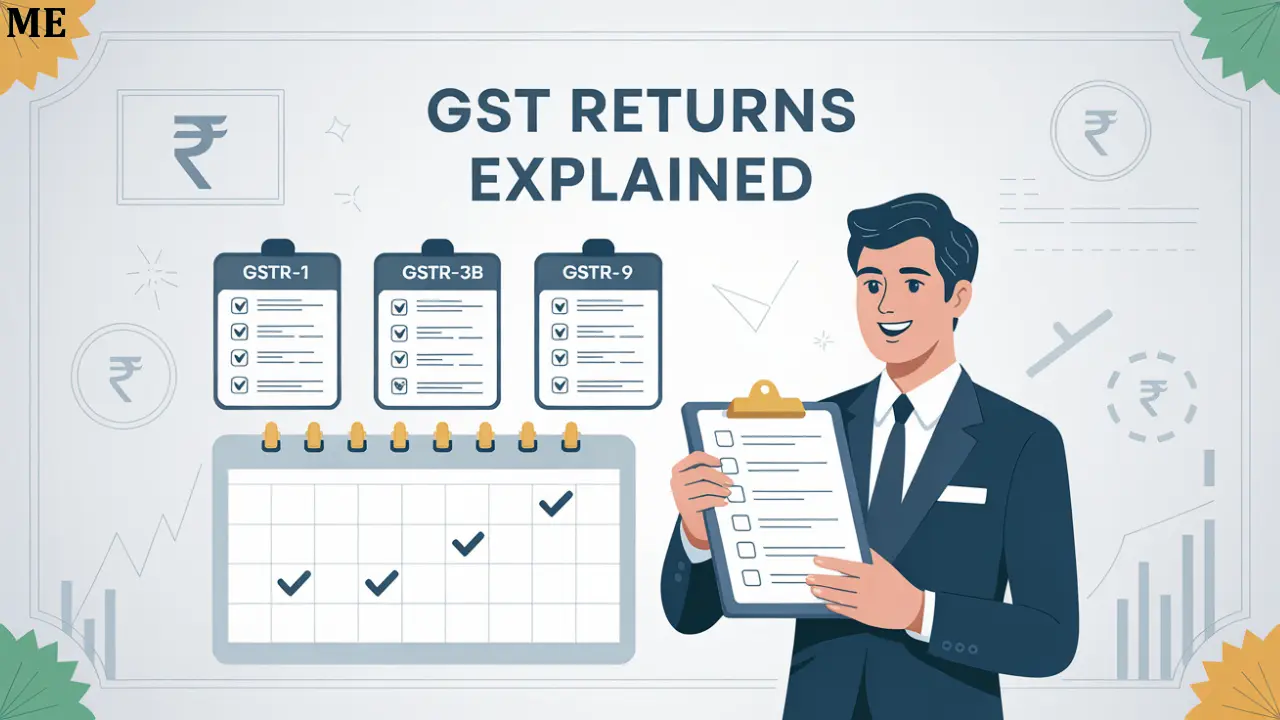
What Are GST Returns? Types of GST Return Forms, Filing Dates Filing an Income Tax Return (ITR) is mandatory for various individuals and entities in India, even if they don’t owe any tax. Here’s a summary of who needs to file: Manthan Experts July 14, 2025 GST Introduction GST Returns are forms that businesses registered under the Goods and Services Tax (GST) system must file periodically to report their sales, purchases, output GST, input tax credit (ITC), and other tax-related information. These data helps the governments to track and manage the collection of taxes also the shows the Contributions in the GDP the Country as well as state. A comprehensive summary of the different GST return formats, their required submission timeframes, and the corresponding compliance duties for businesses. Types of GST Returns Within India’s Goods and Services Tax (GST) framework, enrolled firms and taxpayers must submit various categories of GST filings depending on their business type, turnover, and registration type. Below are mentions the types of return which required to be submit or file by the registered persons. GSTR-1 – Details of Outward Supplies Who Files: Registered taxable supplier Filing Interval: Monthly submissions required (with quarterly filing options available for taxpayers who qualify under the Quarterly Return Monthly Payment scheme). Purpose: To declare specifics of all external provisions (sales) of merchandise and services. Encompasses information such as individual sales invoices, debit memos, and credit memos. Scheduled Dates: Deadline for Monthly Submitters: The eleventh day of the subsequent month. For those submitting under the Quarterly Return Monthly Payment system: Due by the 13th of the month following the quarter’s conclusion. GSTR-2A – Auto-Generated Purchase Return Who Files: No manual filing required (auto-generated) Frequency: Monthly Purpose: This is a view-only record displaying particulars of incoming acquisitions (purchases) automatically populated from the vendor’s GSTR-1. Used for input tax credit (ITC) reconciliation. GSTR-2B – Static ITC Statement Who Files: No manual filing required (auto-generated) Periodicity: Monthly (Accessible from the fourteenth of each month). Purpose: Provides a consolidated view of eligible and ineligible Input Tax Credit (ITC). Helps businesses claim ITC accurately. GSTR-3B – A consolidated return summarizing external and internal provisions. Who Files: Registered taxpayer Frequency: Required on a monthly basis (with quarterly options available for businesses registered under the QRMP program). Purpose: An overview of sales, purchase tax credit claimed, and the tax liability. Payment of tax liability. Due Dates: For Monthly Filers: 20th of the Subsequent or Next Month. For QRMPS Filers: 22 or 24 of the Subsequent or Next Month of Quarter End. GSTR-4 – Tax return submission required for businesses operating within the Composition Scheme framework. Who Must File: Taxpayers enrolled in the Composition Scheme. Frequency: Annually Purpose: An overview detailing aggregate business revenue and composition scheme tax liability. Limited reporting requirements compared to regular taxpayers. Due Date: April 30th of the subsequent fiscal year. GSTR-5 – Submitted by Non – Residents. Who Files: Non-resident taxpayers Frequency: Monthly Purpose: Reports sales and purchases made in India by non-resident taxpayers. Payment of tax liability. Due Date: 20th of the following month GSTR-5A – Return for OIDAR Services Who Files: Online Information and Database Access or Retrieval (OIDAR) service providers outside India who provide services in india. Frequency: Monthly Purpose: Particulars of services rendered to unregistered individuals within India. Payment of tax liability. Due Date: 20th of the following month GSTR-6 – Filing for Purchase Tax Credit Distribution Units (ISD). Who Files: Input Service Distributors Frequency: Monthly Purpose: Allocation of purchase tax credit (ITC) across operational units. Reports details of ITC received and distributed to their associates Due Date: 13th of the following month GSTR-7 – Return for TDS Deductors Who Files: Tax Deductors (like government departments) Frequency: Monthly Purpose: Reports details of Tax Deducted at Source (TDS) under GST. TDS certificate is auto-generated after filing. Due Date: 10th of the following month GSTR-8 – Return for E-Commerce Operators Who Files: E-Commerce Operators Frequency: Monthly Purpose: Reports details of supplies made through the E – Commerce platform. Tax collected at source (TCS) under GST on monthly basis. Due Date: 10th of the following month GSTR-9 – Annual Return Who Files: Regular taxpayers Frequency: Annually Purpose: A holistic summary of all GST filings submitted during the fiscal year. Includes data on sales, acquisitions, purchase tax credit (ITC), and tax liabilities. Due Date: 31st December of the subsequent or Next financial year. GSTR-9A – Yearly return for taxpayers under the Composition Scheme. Who Files: Composition Scheme taxpayers (Optional) Frequency: Annually Purpose: Overview of all returns submitted under the Composition Scheme throughout the financial year. Due Date: 31st December of the subsequent financial year. GSTR-9C – Reconciliation Statement Who Files: Taxpayers whose total turnover exceeds ₹5 crore. Frequency: Annually Purpose: Reconciliation of GSTR-9 with audited financial statements of relevant financial year. Certification by a Chartered Accountant (CA) is required. Due Date: 31st December of the subsequent financial year. GSTR-10 – Annual Return Who Must File: Entities whose GST registration status has been terminated or voluntarily relinquished. Frequency: Once Purpose: Reports details of closing stock and final tax liability. Due Date: Must be completed within a three-month timeframe following the cancellation notification or official order. GSTR-11 – Return for UIN Holders Who Must File: Individuals or entities holding a Unique Identification Number (UIN). Frequency: Monthly Purpose: Requests a refund for taxes paid on incoming supplies. Due Date: 28th of the following month Common GST Filing Timelines Overview Key Notes: ✅ ₹50 per day penalty is levied for late filing (₹20 for NIL returns). ✅ Delayed tax payments incur an interest charge of 18% per annum. ✅ Taxpayers enrolled in the Quarterly Return Monthly Payment (QRMP) plan are required to submit GSTR-1 and GSTR-3B on a quarterly basis yet remit taxes every month. Conclusion: Submitting GST returns correctly and promptly is essential to ensure compliance and prevent penalties. Businesses must stay on top of return filing deadlines and ensure all details are correctly reported to prevent tax issues. If you require assistance on filing any specific GST return, Manthan Experts can be your trusted advisor. Contact them at info@manthanexperts.com.to discuss your specific needs and explore how their expertise can benefit your business. Table of Contents Introduction Types of GST Returns GSTR-1 – Details of Outward Supplies GSTR-2A –… Continue reading What Are GST Returns? Types of GST Return Forms, Filing Dates
Who is Required to File Income Tax Returns (ITR) in India?
Who is Required to File Income Tax Returns (ITR) in India? Filing an Income Tax Return (ITR) is mandatory for various individuals and entities in India, even if they don’t owe any tax. Here’s a summary of who needs to file: Manthan Experts August 21, 2025 Blog, Income Tax Consultancy, ITR e-Filing Who is Required to File Income Tax Returns (ITR) in India? Filing an Income Tax Return (ITR) is mandatory for various individuals and entities in India, even if they don’t owe any tax. Here’s a summary of who needs to file: 1. Companies: All companies must file ITR regardless of their profit or loss. 2. Partnership Firms: All partnership firms must file ITR regardless of their profit or loss. 3. Individuals (Resident of India): Individuals exceeding the basic exemption limit: Old Tax Regime: New Tax Regime: ₹3 Lakhs for all individuals. 4. Individuals claiming a tax refund: If TDS deductions exceed assessee’s tax liability, assessee must file ITR to claim a refund. 5. Individuals carrying forward losses: To carry forward losses incurred in a particular year, assessee must file ITR. 6. Individuals with foreign assets: Residents of India with assets or financial interests in foreign entities are required to file ITR. 7. Individuals with foreign accounts: Residents of India who are signing authorities in foreign accounts must file ITR. 8. Individuals receiving income from certain trusts/institutions: Individuals receiving income from trusts, religious institutions, educational institutions, etc., must file ITR. 9. Foreign companies seeking treaty benefits: Foreign companies seeking tax treaty benefits on transactions in India must file ITR. 10. Individuals exceeding certain financial thresholds: Individuals who have deposited more than ₹1 Crore in current accounts, ₹50 Lakhs in savings accounts, spent more than ₹2 Lakhs on foreign travel, paid electricity bills exceeding ₹1 Lakh, or had TDS/TCS exceeding ₹25,000 in the previous year. 11. Individuals engaged in business or profession exceeding certain thresholds: Individuals engaged in business with a turnover exceeding ₹60 Lakhs or in a profession with gross receipts exceeding ₹10 Lakhs. 12. Individuals with Capital Gains: If assessee have earned capital gains through the sale of assets like property, shares, etc., then assessee must file his/her returns to report these gains. 13. Taxpayers with Deductions Under Section 80: If assessee have claimed deductions for investments or expenses under sections like 80C (PPF, NSC, life insurance), 80D (health insurance), etc., then assessee must file ITR. 14. HUF (Hindu Undivided Family): A Hindu Undivided Family needs to file ITR if their total income exceeds the exemption limit. 15. Non-Resident Indians (NRIs): If assessee are an NRI and have income in India, assessee must file ITR to comply with Indian tax laws. Consequences of Not Filing ITR Penalties: Failure to file ITR within the prescribed deadline can result in penalties. Non-Tax Audit Cases: Under Section 234F, if assessee fail to file his/her ITR within the due date, a late fee of Rs 5,000 will be applicable. So, In context of the above if the annual income of assesse is below Rs. 5,00,000 then the Late Fee would be Rs. 1,000. Tax Audit Cases: ₹1,50,000 or 0.5% of Total sales, whichever is lower. If assessee missed the due date or even not filed Income Tax return upto 31 December u/s 139(4), then there is No chance of filing the Tax Return. In case assessee miss the deadline prescribed u/s 139(4), then they may file return u/s 139(8A) i.e. ITR U(Updated return) in certain specified cases. Now Let us Discuss ITR-U (Updated Return) ITR-U is a mechanism introduced under Section 139(8A) of the Income Tax Act, 1961, that allows taxpayers to update their previously filed Income Tax Returns (ITR). This is crucial because it provides an opportunity to correct errors, omissions, or discrepancies in the original return. Eligibility for Filing ITR-U Within Two Years: ITR-U can be filed within two years from the end of the relevant assessment year. For example, for the Assessment Year 2024-25 (relating to the financial year 2023-24), the deadline for filing ITR-U would be March 31, 2026. NOTE:- In the Union Budget 2025-26, Finance Minister Nirmala Sitharaman introduced key amendments to the Updated Income Tax Return (ITR-U) provisions to enhance voluntary compliance. The deadline for filing an updated return has been extended from 24 months to 48 months from the end of the relevant assessment year, allowing taxpayers more time to rectify errors, disclose unreported income, and comply with tax regulations. This revision aims to improve transparency and reduce litigation by providing a structured mechanism for correcting past tax filings while ensuring timely tax payments. Reasons for Filing ITR-U Correcting Errors: Incorrectly declared income Wrong selection of income heads Errors in tax calculations Omitted deductions or exemptions Reporting Missed Income: Including income that was not reported in the original return. Adjusting Tax Credits: Correcting errors in the calculation of tax credits. Search Table of Contents Who is Required to File Income Tax Returns (ITR) in India? Consequences of Not Filing ITR Now Let us Discuss ITR-U (Updated Return) Eligibility for Filing ITR-U Reasons for Filing ITR-U Latest Blog and News Audit & Assurance Blog Bookkeeping & Accounting GST Income Tax Consultancy ITR e-Filing Knowledge Update Payroll (PF & ESIC)